
Why, what, and how we eat is all about our neurological reward circuits, the dopamine pathways that control so much of what we do. These are the channels tapped, to our detriment, by the designers of ultraprocessed food. They are also the paths that lead to pleasure when we drink, smoke a cigarette, or eat a weed gummy.
In this four-part series I’m going to expand the scope of Eating In America a little bit and look at one of the non-food items consumed by 44 million Americans in the last month: cannabis.
We begin with a surprising history of ye olde cannabis.
It was the Puritans and ye other olde colonists from England that brought cannabis, otherwise known as hemp, to America. It was so valuable for making rope, sails, and clothing, hemp was used as currency. Jamestown was growing it from the start in 1607, and in a while the Virginia, Massachusetts, and Connecticut colonies passed laws that farmers had to grow it. Yes, it was illegal not to grow cannabis, although the cannabis strains in question were industrial hemp, bred for fiber without enough THC content for intoxication.
Medicinal use of cannabis began in the 1840s and became very common and widespread. Cannabis was in many medicines, including tonics, tinctures, and extracts. Parke-Davis, one of the world’s largest pharmaceutical companies, was among the drug manufacturers producing cannabis products.
The weight of medical opinion began to turn against cannabis in the late 1800s. In 1915, California, always ahead of the times, was the first state to make recreational cannabis illegal. Ironically, later in the century California was the first state to make cannabis legal again.
By 1937, 23 states had made possessing cannabis illegal, which is, with almost perfect symmetry, nearly the number of states that have re-legalized recreational cannabis today.
In 1937 Congress made cannabis illegal for the first time across America by passing the “Marihuana Tax Act.” Motivated by its own racism, Congress called the drug marijuana, its Mexican name, to promote anxiety and fear about the large number of Mexicans who had come to the U.S.
1937’s “Reefer Madness” is an outrageous anti-cannabis propaganda movie intended to stoke the building fear about cannabis. Of course, in the 1970s “Reefer Madness” was resurrected and became a cult classic: a terrible film but amusing for many when sufficiently stoned.
I’m using the term “cannabis” throughout this series instead of “marijuana” or a slang term. “Cannabis” is the scientific name for the plant and what the drug was called before the 1930s.
In Part 3 we will look at how the hemp form of cannabis has recently been exploited to make high THC content products that have been marketed to youths by unscrupulous producers outside the regulated cannabis industry.
So on to our investigation of today’s cannabis environment. Cannabis madness or long-awaited sanity? There are many questions that need addressing.
What are the dramatic changes that have occurred in cannabis itself in the last 25 years? What does the evolving legal landscape for cannabis look like in America? How chaotic is the regulatory landscape? What is the role of medical cannabis? How can and, indeed, should medical cannabis dispensaries remain a part of the landscape?
Why do more people today use cannabis on a daily or near daily basis than drink alcohol? Yes, since 2022 more people are frequent cannabis users than frequent alcohol consumers!
What are the new and increasingly dominant economics of cannabis? And what are some policy changes that would help address safety and public health issues while aligning cannabis use and regulation with both science and public attitudes?
Let’s get to sorting out the madness.
Tetrahydrocannabinols, or THC, are the psychoactive chemicals in cannabis that are the reason it is so popular as a consumable. THC content in cannabis stayed fairly level at around 5% from the 1970s into the early 2000’s. Since then average levels have climbed steeply to around 20%, a four-fold increase.
Cannabis bought on the black market today is often not as strong as that bought in a dispensary, but it can be. And there are concentrated products in dispensaries that can go over 90% THC content.
High content extracts are made using solvents. The chemicals used in producing extracts, both regulated and black or gray market, are not well identified, but solvents commonly used in making black or gray market extracts include alcohols, acetone like in nail polish remover, and toxic petroleum-based chemicals.
Safely produced or not, these extracted products are ultraprocessed, and so cannabis has joined the food we eat in the era of the ultraprocessed.
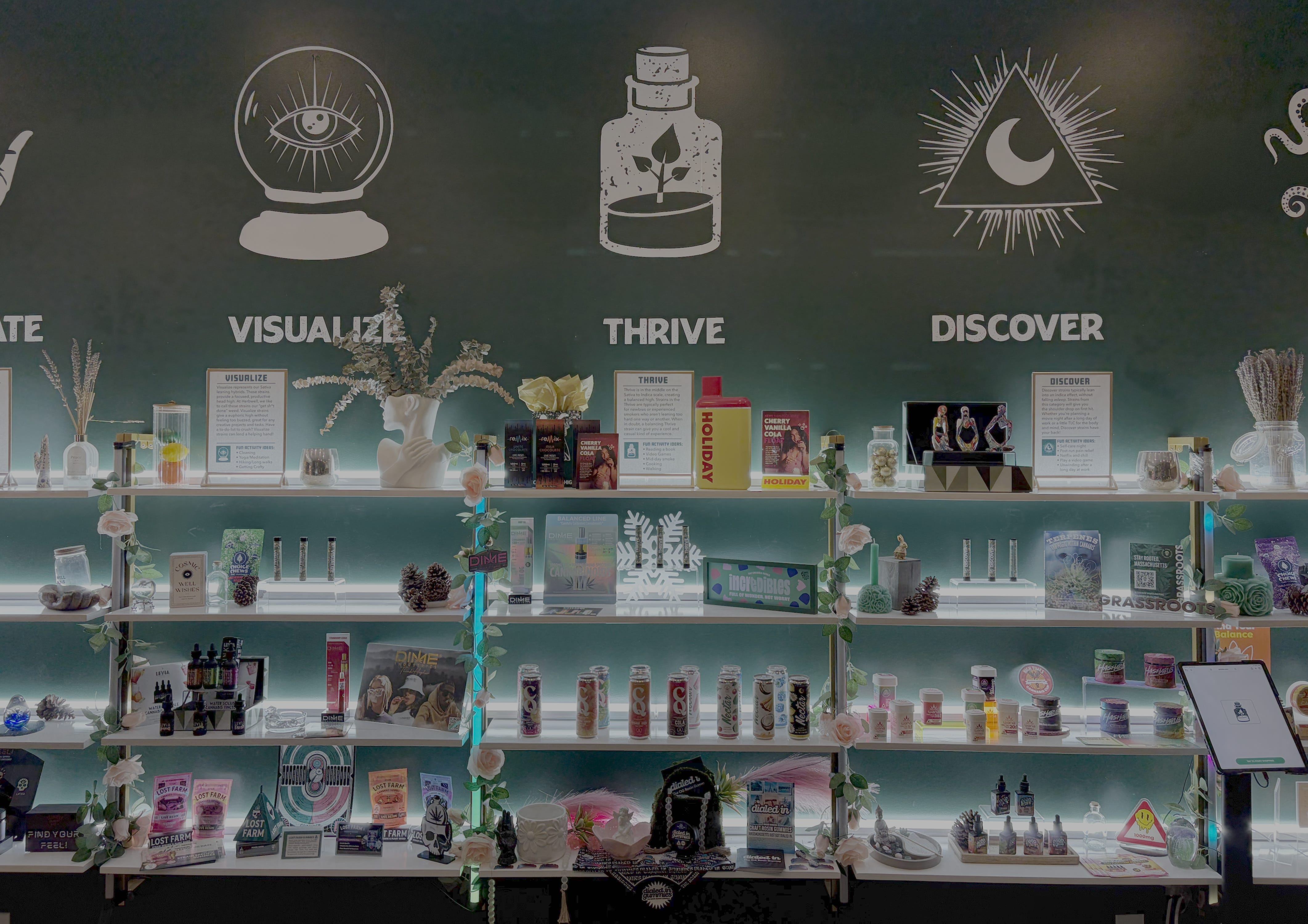
A visit to a recreational dispensary makes evident that connoisseurs are a part of today’s cannabis culture, not dissimilar to the way connoisseurs are a part of wine culture. There is a lot to know about the psychoactive effects of various cannabis cultivars, blends, and forms of administration. While the Indica plant species label denotes a sedative effect and the Sativa species an energizing or cerebral effect, those are somewhat outdated terms, in that there are many compounds in cannabis called terpenes, each of which has a different psychoactive effect.
And then there are the 120 plus cannabinoids, the most well-known two being the psychoactive Delta-9 THC and the not-psychoactive cannabidiol, or CBD. The THC and CBD quantities are stated in products displayed in recreational dispensaries.
However, CBD will create differing effects of the THC, depending on the overall blend of compounds, the form of administration, quantities, and the consumer’s biology. For example, sometimes the high is enhanced or muted, or unwanted effects of THC, like anxiety, are reduced. To the uninitiated, trying to figure out the offerings in a dispensary and what a product will be like when consumed can be more guess work than shopping the Burgundy section at a high-end wine shop.
So where can cannabis be bought legally today?
Cannabis is fully legal in 24 states and Washington D.C. with recreational and medical dispensaries in all of them except for Virginia, where sales will likely be allowed this year. Fifteen more states and Puerto Rico allow only medical cannabis sales, and six more states allow sales of CBD oil with a low level of THC. You will not find any kind of cannabis for legal sale or consumption in Idaho, Wyoming, Nebraska, North or South Carolina.
Most states with recreational dispensaries allow a limited amount of home growing, typically 3 to 6 plants per person. Only a few states that allow sales of cannabis solely for medical purposes also permit home cultivation.
Cannabis’s illegal status at the federal level has resulted in highly variable regulation and enforcement, ranging from inadequate to, at times, grossly inadequate, as states have legalized cannabis one by one. The patchwork quilt of regulation has two layers since essentially every state that has recreational cannabis started with medical legalization, requiring dual-levels of regulation per state for the co-existing channels of dispensing.
Estimates date the growing of Cannabis sativa to 10,000 BC, likely as a grain food and for its useful fiber. The first known medical uses are attributed to the Chinese emperor Shen Nung, around 2,700 BC. Since then, medicinal cannabis has been used and researched around the globe and widely used here in America in the 19th century.
However, as we have seen, quoting science writer Stephanie Pain, “In the twentieth century, prescription gave way to proscription.” What was once recommended, became forbidden.
Despite cannabis’s illegal status over the last 100 years or so, Americans suffering physical or mental ailments have long sought the return of medicalized cannabis as an adjunct or alternative to federally-approved medicine or treatment.
Thank you for reading. In Part Two of “Ultraprocessed Cannabis: Potency, Policy, And Public Health In America,” we take the pulse of medical cannabis and consider the rise of cannabis use disorder.
I appreciate your support of Eating in America. I am on a subscriber drive, so please let your friends and family know and feel free to share this post. Every reader and every subscription, free or paid, counts towards helping Eating in America grow, and is appreciated. Like this is, if you do, and let us know your thoughts about the state of cannabis in America!


