
GLP-1 coverage shrinks as demand grows
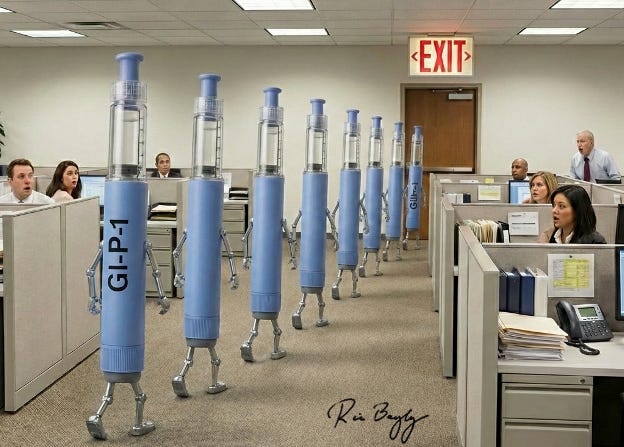
As costs rapidly rose in the last few years due to expanded coverage of GLP-1s like Ozempic, Wegovy, and Zepbound, insurers began to respond with medication management programs and restrictions on coverage. Many GLP-1 patients prescribed for obesity or excess unhealthy weight have struggled to maintain coverage, pay increased costs for coverage, or find the money to buy their medicine without insurance help.
GLP-1 medications are highly effective for not only treatment of excess unhealthy weight but for treatment of diabetes. Patients with diabetes have experienced cutbacks in coverage, too, but not to the same extent as those being treated for obesity.
Of course, Zepbound and the others are very expensive. A study by authors at Yale, Harvard, King’s College Hospital London, and Doctors Without Borders, estimated that the full price of Ozempic is more than 200 times the cost of manufacturing. But the two major GLP-1 makers, Novo Nordisk and Eli Lilly, operate in an unregulated near-monopoly market in the U.S., where one of eight adults are prescribed a GLP-1.
CVS Caremark, an Aetna company, dropped GLP-1 coverage for obesity in July, but is facing a class-action lawsuit to restore it. Many other commercial insurers and large, self-insured employers have dropped GLP-1 coverage for obesity or imposed restrictions or larger shared costs.
Three states recently dropped Medicaid coverage for patients to receive a GLP-1 for obesity. Now only thirteen states provide coverage, which is sad given that Medicaid patients are among the most impoverished and a population heavily afflicted by the disease of obesity.
It is disturbing to see patients pulled away from access to a highly effective medication which is likely providing substantial health improvement and for which there is no equivalent substitute.
Worst are the manipulative processes used by GLP-1 management programs such as EnCircleRx, a cost control program started in 2024 by EverNorth, a prescription insurance company under the Cigna umbrella. In the face of GLP-1 coverage cost increases of as much as 40% a year hitting some plan sponsors in the insurance market, EverNorth offered employers EnCircleRx, with a guaranteed 15% cap on cost increases, year-to-year. EnCircleRx manages costs by creating barriers erected at the prior authorization stage and then finds additional savings with its lifestyle support program.
In the first year, eleven million patients were enrolled in EnCircleRx to get their GLP-1. As part of the process most are required to engage at least once a week with a program called Omada Health. Omada provides required nutrition, exercise, and behavioral health education and weigh-ins which are instantly uploaded from a connected digital scale provided by Omada. As beneficial as healthy eating and exercise are, these are likely things these patients have already tried unsuccessfully on their own for losing weight: interventions that science has proven do not work for most people in the long run. However, if a patient stops engagement with Omada, their EnCircleRX GLP-1 coverage can be taken away, and they will have to pay the market cost or drop the medication.
The value of a program like Omada for increasing weight loss while on a GLP-1 is questionable. There has come to be considerable medical consensus that these sorts of GLP-1 add-on programs are important for weight loss, and it seems, sort of, like it makes sense, but a good randomized controlled trial proving that assumption is hard to find.
Actual nutrition modifications and exercise are not required as part of Omada and similar programs, just receiving the message that they are important. If there was good fact-based evidence that eating changes and physical activity were essential, it seems to be these lifestyle plans would require them.
In addition to burdening patients with this sort of “use-or-lose” nutrition and exercise counseling regimen, there are reports of programs like EnCircleRx rejecting patients for coverage out-of-hand, at least until the patient puts in an appeal, even though they meet the requirements for high BMI or elevated BMI in combination with other chronic conditions which can benefit from weight loss like high-blood pressure, high cholesterol, cardiovascular conditions, sleep apnea, or diabetes.
Weaker or stronger bones with GLP-1s?
Patients who take a GLP-1 to lose unhealthy weight or treat diabetes should be warned that weight loss, especially the sometimes-dramatic losses that can come with GLP-1 use, warrants regular exercise to stem the potential loss of muscle mass. A lot of muscle can be consumed as the body seeks to replace the calories it’s not getting from food by instead burning skeletal muscle along with the targeted fat. Strengthening through resistance work is very important, but vigorous aerobic exercise should be added to the regimen as well.
Tangible reductions in strength can be felt with muscle mass loss. What is not tangible, is unseen, and is seldom discussed are changes in bone mass density that may occur with weight loss and GLP-1 use. Weight loss without GLP-1 use is linked to decreasing bone mass density, meaning weaker bones and more susceptibility to fractures. However, studies have reported conflicting results about weight loss caused by GLP-1 use. GLP-1s might provide limited help in increasing bone mass density while losing weight – or they might not. A 2024 randomized controlled study found that the GLP-1, liraglutide, sold as Saxenda for weight loss, reduced bone mass density along with body fat and weight. Exercise combined with liraglutide roughly cut in half the loss of bone mass density.
So, for those of us prescribed a GLP-1, in addition to the effect of heavy resistance exercise in stemming the loss of muscle, we have yet another reason to be at the gym.
New GLP-1 medications coming
Three new GLP-1s may reach the market this year, according to the Journal of the American Medical Association. Eli Lilly, maker of Zepbound and Mounjaro, expects fast track FDA approval of a new semaglutide pill, Orforglipron, targeted at those reluctant to self-inject. Trials of the pill, to be taken daily, delivered an average weight loss of 11% in patients with obesity but not diabetes after about a year and a half.
Novo Nordisk has a high-dose version of Wegovy that is also on FDA fast track. The new injectable will have three times more semaglutide in it than Wegovy. Trials in patients with obesity but not diabetes indicate an average 19% weight loss, only about 3% more than Wegovy delivers.
Novo Nordisk has also applied for approval of a new injectable, this time combining semaglutide with cagrilintide. The new drug, CagriSema, is on a par for efficacy with the high-dose Wegovy, with trials providing 20% weight loss in patients with obesity but not diabetes. However, CagriSema also registered slightly more side effect reports than Wegovy.
Other more powerful GLP-1s and related drugs are in the works. One of the objectives of coming products will be more weight loss but we also might find medications coming which are intended to cause less side effects, which are an important limitation for some folks trying to stay on a GLP-1.
Thank you for reading. Please help Eating In America grow by liking, commenting, or passing this along, and please subscribe, if you haven’t, at EatingInAmerica.co.


