
There are so many facets to the revolution in weight loss and control that is being led by the new GLP-1 class of drugs. Today I touch on a few of the many important aspects of GLP-1s. What I don’t get to today, I’ll try to return to soon.
The headline this week: Price cuts and wider coverage for GLP-1s
On Thursday, as you have probably heard, President Trump announced GLP-1 pricing will be lower for self-payers and Medicare and Medicaid coverage will be wider in a new deal with Eli Lilly and Novo Nordisk, makers of Zepbound, Wegovy, Ozempic, Mounjaro, and their upcoming oral versions, for weight loss and diabetes.
Given this is a Trump deal, the devil is in the details, such as whether the cost savings for injectables will include the convenient and painless pen versions or be for the vials only. Bring your own syringe, if it is just for the vial versions.
More certainly, barriers to expanding GLP-1 access in Medicare include that Medicare Part D drug plan pricing for next year is already fixed – without the large additional cost of GLP-1 coverage for obesity worked in. Also, it is currently against the law for Medicare to cover pharmaceuticals for control of obesity. Offering GLP-1s for obesity as part of a pilot program is proposed as the work-around for the legal issue.
Nonetheless, this deal is perhaps two steps forward, after Trump took a step backward in April and nixed Biden’s proposed expanded Medicare coverage of GLP-1s.
On the same day as the GLP-1 deal, the FDA gave priority slots for quick reviews of Eli Lilly’s Orforglipron and Novo Nordisk’s oral semaglutide, the pill versions of Zepbound and Wegovy for weight loss. The lower cost of the pill versions along with likely higher consumer acceptance of pills vs injectables, could have a major impact on uptake of GLP-1s by Americans. These pill versions are likely to be a huge step forward.
GLP-1s and understanding that weight loss struggles are all about biology
First, the basics. GLP-1 is a gut-produced hormone, glucagon-like peptide-1. The GLP-1 class of popular weight loss and diabetes control drugs mimic the natural hormone and amplify its effects.
Zepbound and Wegovy are GLP-1s indicated for weight loss and the lower dose versions, Mounjaro and Ozempic, are indicated for diabetes.
GLP-1s are linked to reduced risk of stroke, heart attack, Alzheimer’s, and kidney disease. GLP-1s help with sleep apnea and some lung conditions. There is evidence of reduced cancer risk, increased control of substance disorders, and benefits for a number of other conditions.
These drugs are sometimes quietly acclaimed by researchers and personal doctors, and often loudly acclaimed by users, who don’t have a professional reputation at stake, as miracle drugs. The main miracle is that these hormone-mimicking drugs easily override a patient’s hard-wired biology and make them lose weight.
Before GLP-1s came along scientists had begun to understand that body weight wasn’t controlled so much by behavior and willpower as by biology. I hope that widening familiarity with the effectiveness of GLP-1s will increase popular understanding that biology is the biggest factor in the weight gain and weight loss equations and thus reduce stigma both around excess weight and the use of GLP-1s, which are biological agents, to control unhealthy weight.
The profitability of Americans believing in willpower
Food manufacturers along with diet profiteers, including influencers and sellers of weight control programs, apps, books, and magazine articles, would like you to believe that you don’t need any remarkable willpower so much as their product and their advice. Inherent in their business model is to keep us thinking as long as possible that insufficient willpower is the barrier to weight loss.
However, studies have found that for most people, neither willpower nor dieting aids work in the long term. Weight regain is common. The body’s aversion to weight loss, programmed into our DNA, is too strong. One study which brought data together from many studies found that 75% of weight lost is regained. Weight lost through dieting or deprivation is met with the body’s strong biological response to restore the lost weight.
Meanwhile, profits in the dieting sector are being reduced by the popularity of GLP-1s even as attitudes are slow to change. Diet nutrition provider Jenny Craig Inc. fell first, and Weight Watchers International went out of business in April.
American attitudes about GLP-1s seem to depend on whether it’s about health or (perceived) vanity
According to a February 2024 Pew Research survey, 53% of Americans, a little more than half, believed GLP-1s were good options for losing weight for obesity and weight-related health conditions. Only 19% believed GLP-1s were not good options for losing weight for obesity and weight-related health conditions. However, a slim 12% thought GLP-1s were good options simply to lose weight and 62% thought GLP-1s were not good options simply to lose weight.
A year later, in January 2025, an AP-NORC survey, found the same results, showing remarkable stability in attitudes about GLP-1s even as their popularity was still rapidly increasing.
Many folks tend to regard using a GLP-1 to lose weight without an obvious health reason, as a shortcut. It’s not clear why this stigmatizing attitude is so common, while latitude is given to GLP-1 users who have more severe obesity or weight-related chronic disease.
True, it is easy to find Hollywood stars who appeared previously to have a perfectly healthy weight but who then more recently seemed to have gotten thinner. One guesses that the Ozempic that Jennifer Coolidge on the Emmys and others joke about was responsible in these cases.
But the number of stars using GLP-1s does in fact make a case for how difficult it is to lose weight by sheer behavioral changes and willpower. Actors are generally highly motivated to have the most marketable body possible. If Hollywood can’t do it without Ozempic, it’s unreasonable to think the rest of the world is going to be more successful, when its only health at stake and not even a movie part.
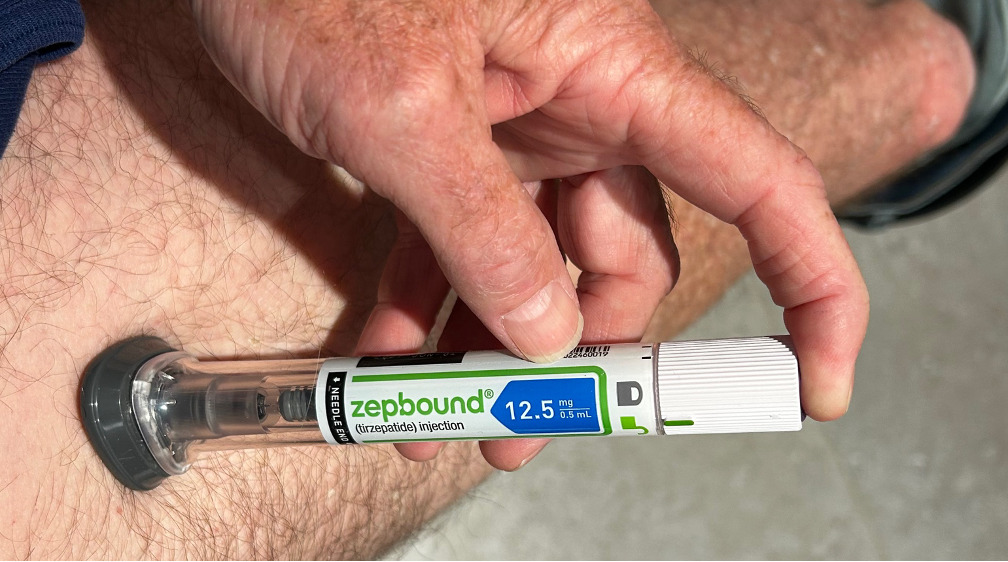
I use Zepbound.
There are many things in our culture which were heavily stigmatized not so long ago but are now seen as quite normal and accepted: divorce, mental health treatment, tattoos. I can claim to be normal around two of these items. Not yet tattoos, but I have plans.
I hope stigma around the use of GLP-1s fades away in the same way that the stigma around mental health treatments like Prozac is fading. I am lucky to be able to use Zepbound to lessen my health risks and improve my ability to lead a healthy life. I was among the 31% overweight and 42% obese Americans before using Wegovy and Zepbound.
RFK Jr. is right: the health of our nation depends on defeating the obesity epidemic
I fully agree with Kennedy that our nation’s health is weakened by the obesity epidemic and the many chronic diseases linked to unhealthy weight. And Kennedy is right in some things he says about our food environment and why we as a nation don’t eat well. (Kennedy is of course quite off the mark and irresponsible in some other ideas about how to eat healthy. He has no business being the top leader of our nation’s health, on the basis of his nutrition misconceptions alone.)
The cure? Fixing our sick food environment.
RFK, Jr. says that the GLP-1 deal
“…is going to have dramatic effects on human health in this country.”
Let’s hope so. But while these hormone mimickers are miraculous, the best way, and really the only way in the long term, to control obesity and overweight in our society is to cure our sick food environment.
Big Food, i.e., the ultraprocessed food industry, is big because it has gone to the laboratory and created products that are hyperpalatable – meaning we can’t get enough – and manufactured and marketed these food products to a trusting American people, including me.
When suspicions have been raised about the health implications of these products, Big Food and the ultraprocessed food lobby, our country’s biggest lobby by far, exert their power over government, and too often over science, funding research to quiet or cast doubt on worries.
In response, government regulation is required to protect America’s citizens from food corporations and the agricultural powers who have been allowed to harm our health for their profits.
Let’s have a chuckle to conclude
Addressing the press after Trump’s announcement of the GLP-1 deal, RFK, Jr., head of the Department of Health and Human Services, claimed
“The American public, because of this agreement, will lose 125 million pounds by this time next year.”
Not to be outdone, Dr. Mehmet Oz, Head of the Centers for Medicare and Medicaid, contradicted Secretary Kennedy, saying he had an update.
“We thought it would be 125 million pounds. Mr. President, our estimate, based on the company numbers as well, is Americans will lose 135 billion pounds by the midterms.”
The midterms, huh? Apparently, the political meaning of this GLP-1 deal might be more important than the health benefits. But you have to have voters to make politics mean anything. By Dr. Oz’s reckoning the American electorate would evaporate!
To get to the goal of losing 135 billion pounds, every man, woman, child, and infant American would need to lose 388 pounds. Seems like a lot. I think they need to hire those statisticians back at Health and Human Services.


