
Today’s post and podcast are especially for Eating in America’s paid subscribers and supporters, who I thank deeply.
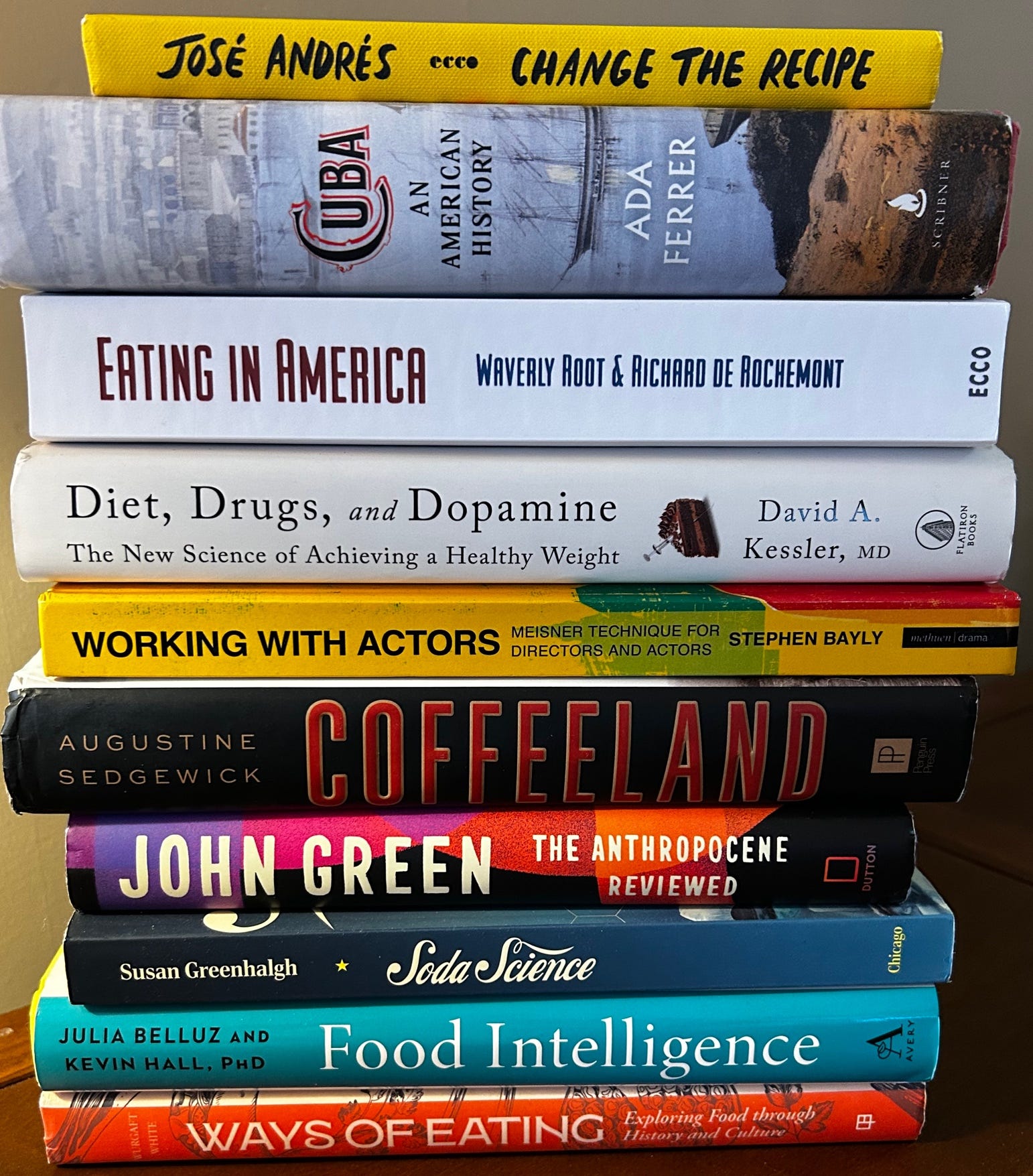
The fascinating and despicable colonial history of our most beloved drug’s most beloved delivery agent, I’m talking about caffeine and the way we most like to take it, that is in coffee, is told in Coffeeland by Augustine Sedgewick.
You could argue that sugar is actually our most beloved drug. David Kessler explains how sugar triggers our reward circuits and is addictive in Diet, Drugs, and Dopamine. I wonder what we can learn about the addictive qualities of ultraprocessed food and why we are not to blame for the eating behaviors brought on by our food environment, and so David Kessler’s book is essential reading. The GLP-1s like Zepbound and Ozempic hold a lot of promise as a fix, although not a cure, for obesity, and they offer benefits for other chronic diseases and disorders. Kessler, a GLP-1 user like me and a doctor, discusses the drugs from a clinical perspective.
On the topic of the biological workings of healthy and unhealthy food, Julia Belluz and Kevin Hall provide a valuable and digestible look at the science in the new book Food Intelligence. I like that I’m in harmony with them in singing the hymn that it is not our lack of willpower that is causing endemic unhealthy eating, it is the food system working as Big Food designed it.
I am fascinated how three addictive substances on the milder side have so taken over the behaviors of so many people over centuries and have parallel histories involving human slavery or near-slavery: tobacco, sugar, and coffee. We might be a little familiar with tobacco and sugar slavery. They were a part of U.S. history. The Central American coffee plantations of the late 19th century bound indigenous people to the work of the plantation by keeping them in hunger. Only if they worked on the plantation could they get fed. Sundays in that Catholic society were not just a day of rest, they were a day of hunger.
I talk in Eating in America about how and why we consume tobacco, sugar, and coffee today, but I feel compelled to understand how the global addiction to them was made possible by the millions of people brutally enslaved or bound to plantations to produce them. Sugar slavery is an immense part of Cuba’s history, so I’m reading Ada Ferrer’s An American History of Cuba.
And also my brother teaches in Cuba (and throughout South America) every year. His new book Working with Actors is in my stack because Stephen Bayly is my wonderful brother and the book is great.
Chef José Andrés’ Change the Recipe, seems to be about how cooking and serving food are acts of love and generosity but more importantly metaphors for how to live a life of love and generosity and efficacy.
John Green’s The Anthropocene Reviewed is interesting…


