

Today we’ll catch up a bit on the news about one thing we need in our diet, lithium, and two we may love: alcohol and sugar.
Lithium, mood, and dementia
The element lithium found in the water we drink every day supports a positive mood and may reduce the risk of dementia. That is good. But don’t let ultraprocessed food deprive you of lithium’s benefit!
Lithium found in trace amounts in drinking water is related to reduced risk of: dementia, death by Alzheimer’s Disease, and suicide. The higher the lithium intake from water, the less the risk.
However, a new study has found that eating ultraprocessed food can be related to a reduced level of lithium in the blood. It might be that the higher levels of salt commonly found in ultraprocessed food cause the kidneys to excrete excess sodium, taking out beneficial levels of lithium along the way.
On the other hand, patients prescribed high levels of lithium for mood regulation – common for the control of bipolar disorder – may be advised by their doctor to have a steady but moderate intake of salt to maintain a not-too-high, but still therapeutic, level of lithium.
Our takeaway from the new study is the possibility that ultraprocessed food can be making our bodies get rid of lithium that can help regulate our mood and maintain our brain function. This is just another compelling reason for us to avoid food that is formulated and packaged and, typically, ultraprocessed. And, the evidence about the reduction of the body’s lithium in an ultraprocessed food diet is another great reason for Make America Healthy Again leader RFK, Jr. and Secretary of Agriculture Brooke Rollins to include recommendations for limits on ultraprocessed food in the upcoming U.S. Dietary Guidelines. Sadly, though, indications are Kennedy and Rollins may barely mention ultraprocessed food in the 2025 Guidelines.
Alcohol and cancer
The bad news is that a new National Academies of Sciences study, a 2025 Surgeon General report, and a new article in the Journal of the American Medical Association summarizing all the evidence, make very clear that drinking alcohol can cause cancer: breast, liver, mouth, throat, voice box, esophagus, and colon and rectal cancer.
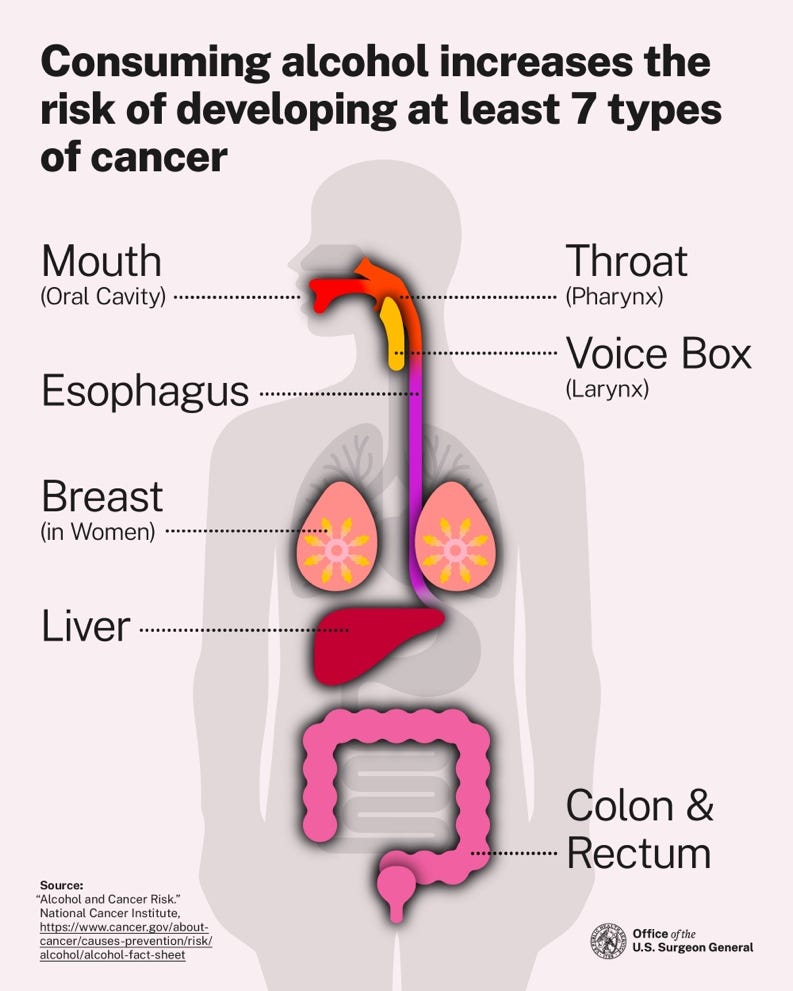
U.S. Surgeon General:
“Alcohol consumption is the third leading preventable cause of cancer in the United States, after tobacco and obesity.”
As we await the government’s presentation of the 2025 U.S. Dietary Guidelines, I’ll note that the alcohol lobby was the next biggest spender after the tobacco lobby in the U.S. from 1998 to 2020, with over a half-billion dollars spent on lobbying by alcohol vs. three-quarters of a billion by tobacco. The 2025 Dietary Guidelines Scientific Committee punted on alcohol recommendations in their report, in deference to the (then) coming National Academies of Sciences report and another report being finished by Kennedy’s Health and Human Services Department. The chance of the new Guidelines presenting stronger language about limiting the use of alcohol because of cancer and other health consequences do not seem hopeful to me.
Nonetheless, this recent focus on alcohol and cancer in science and the media could be, and should be, huge: impactful to our drinking culture and to the alcohol industry. We’ll return to the topic soon here in Eating in America.
Thanks for reading Eating in America! Subscribe for free to receive new posts and support my work.
Coke vs. Coke. Loser vs. loser.
The absurd news is that Donald Trump and his Secretary of Health, Robert Kennedy, are bragging about making Coca-Cola use cane sugar in Coke in the United States. Coke is expected to provide cane sugar Coke this fall in addition to the high fructose corn syrup version they switched to in the early 1980s to save costs.
Coke with sugar, no matter corn or cane, is not a healthy drink.
Cane sugar is sucrose, which is half glucose and half fructose, two other sugar molecules bonded together in the sucrose molecule. High fructose corn syrup is typically 55% fructose and 45% glucose, so about the same chemical balance as cane sugar. Once either high fructose corn syrup or cane sugar is absorbed to your blood, your body can’t tell the difference, so the health outcome is essentially the same.
It will take the sucrose a little longer to be absorbed because the bonds between the fructose and glucose molecules have to be broken down first. But both high fructose corn syrup and cane sugar are associated with obesity, diabetes, heart disease, fatty liver, tooth cavities, and cancer.
How about the taste? Trump seems to prefer the cane sugar Coke.
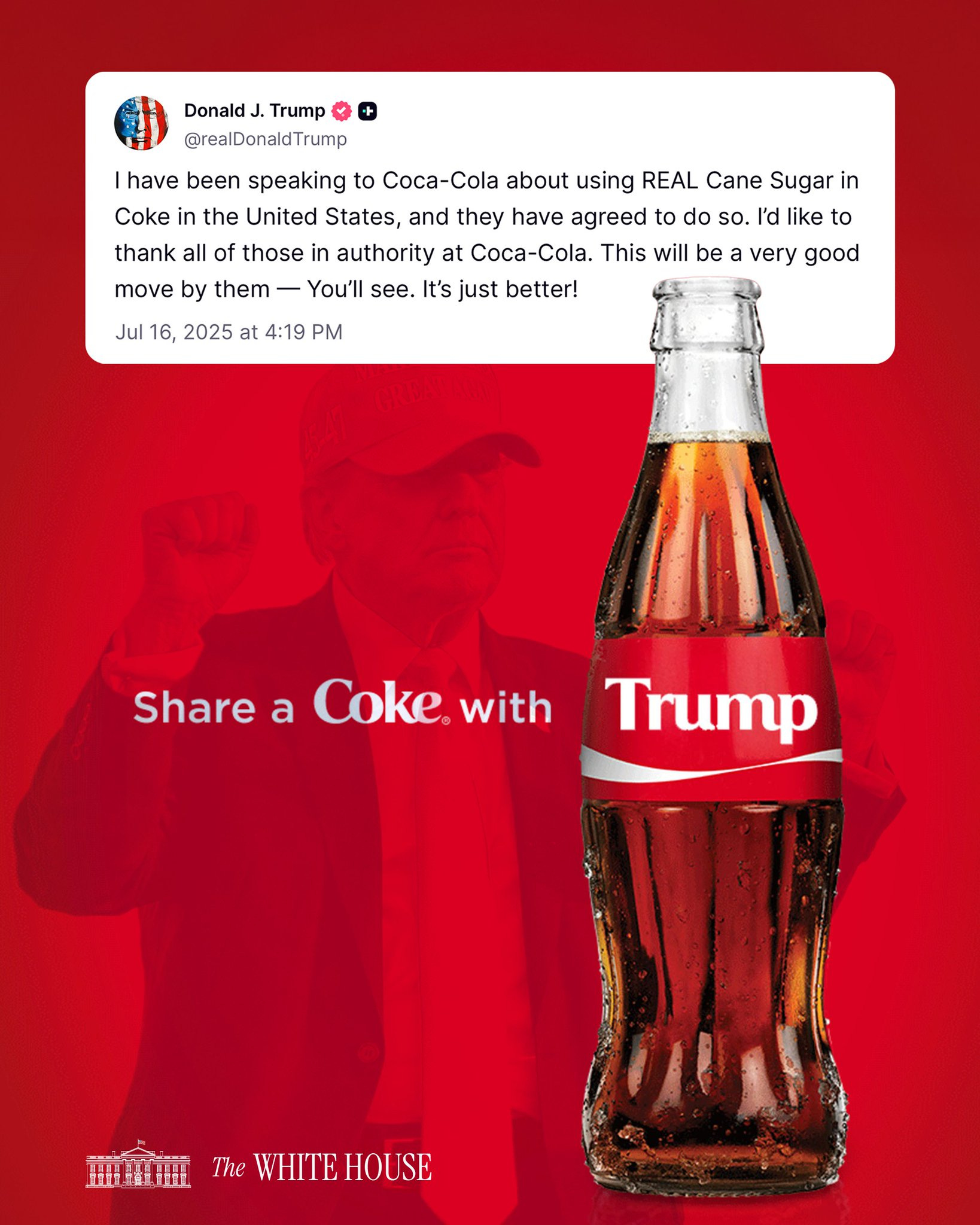
Trump is not alone. Many people, including me, prefer the less-sweet cane sugar taste. I no longer drink Coke like when I was young, but it still makes me feel better when I am sick.
Coke bottled in Mexico with cane sugar is available in glass bottles at Home Depot. With all the plastic and plastic chemicals in our bodies these days, perhaps more than the taste, the use of a glass container over plastic may be the best reason to choose cane sugar in a Mexican bottle of Coke over high fructose corn syrup in a plastic American bottle. But the plastics story is for another time, coming up soon, on Eating in America.
What’s been your relationship to sugar-sweetened beverages in your life?
Thanks for listening. As always you can check the text version of this podcast for links to the science and factual sources of information I used.
And please support this source of factual information by joining as a free or paid subscriber. Thank you.


