
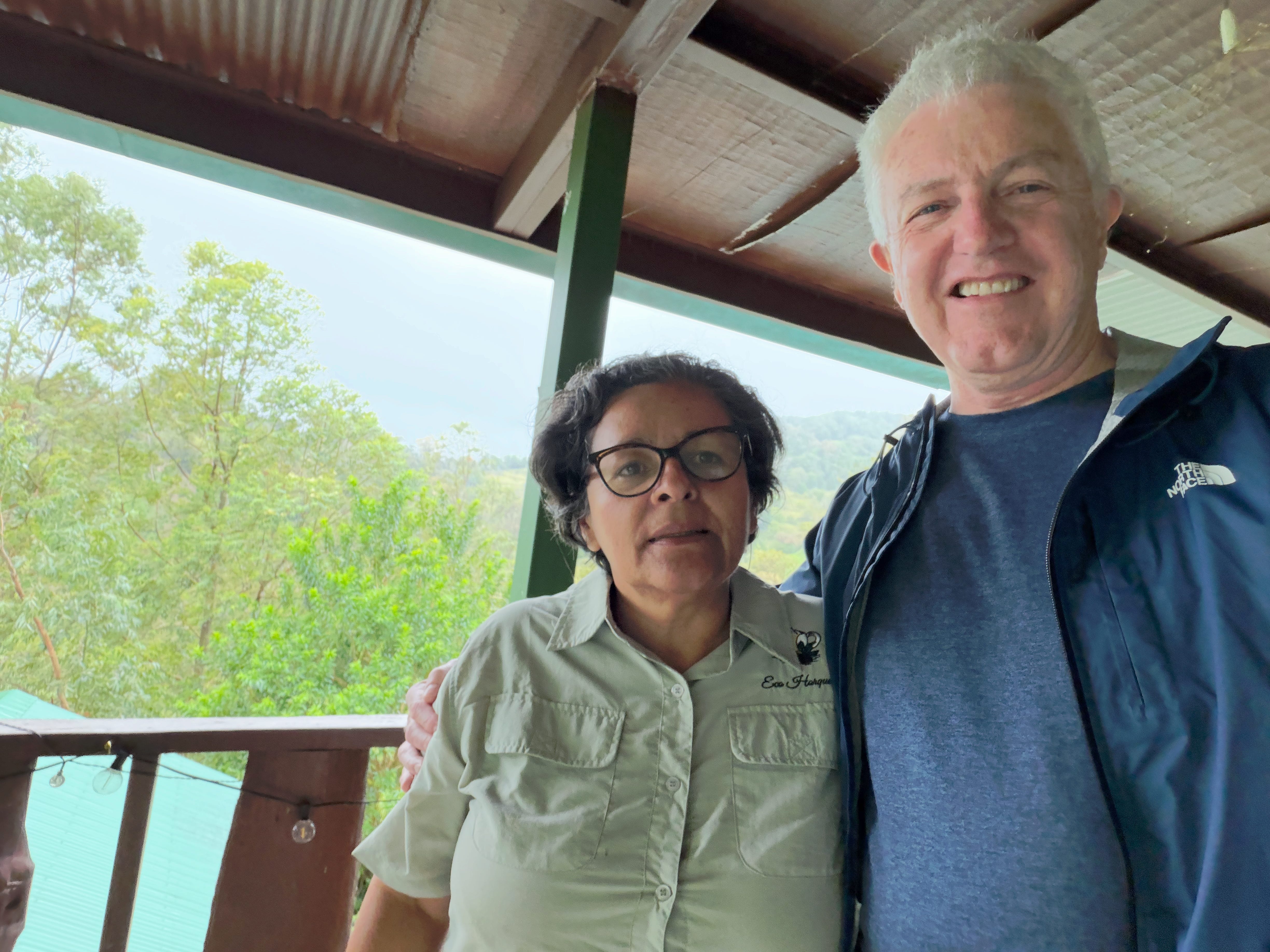
The most special person I have met recently is Marilyn Monroe. That’s her name as she said it, and she didn’t explain why. She was pretty much the opposite in every way of the Marilyn Monroe of the silver screen.
Marilyn was a five-year old Latina niña when she started picking coffee on the finca where her mother worked and lived in the volcanic mountains near Boquete, Panama. As she grew, her employer, the farmer, saw her potential and paid for her school, including university. Marilyn went on to get a law degree, married another lawyer, moved to Panama City, and had a little girl. When her husband died at a young age, Señora Monroe and her daughter, Lorraine, discovered he had purchased a coffee finca near where she had grown up. Leaving her law practice, Marilyn followed Lorraine and her son-in-law back to the mountains.
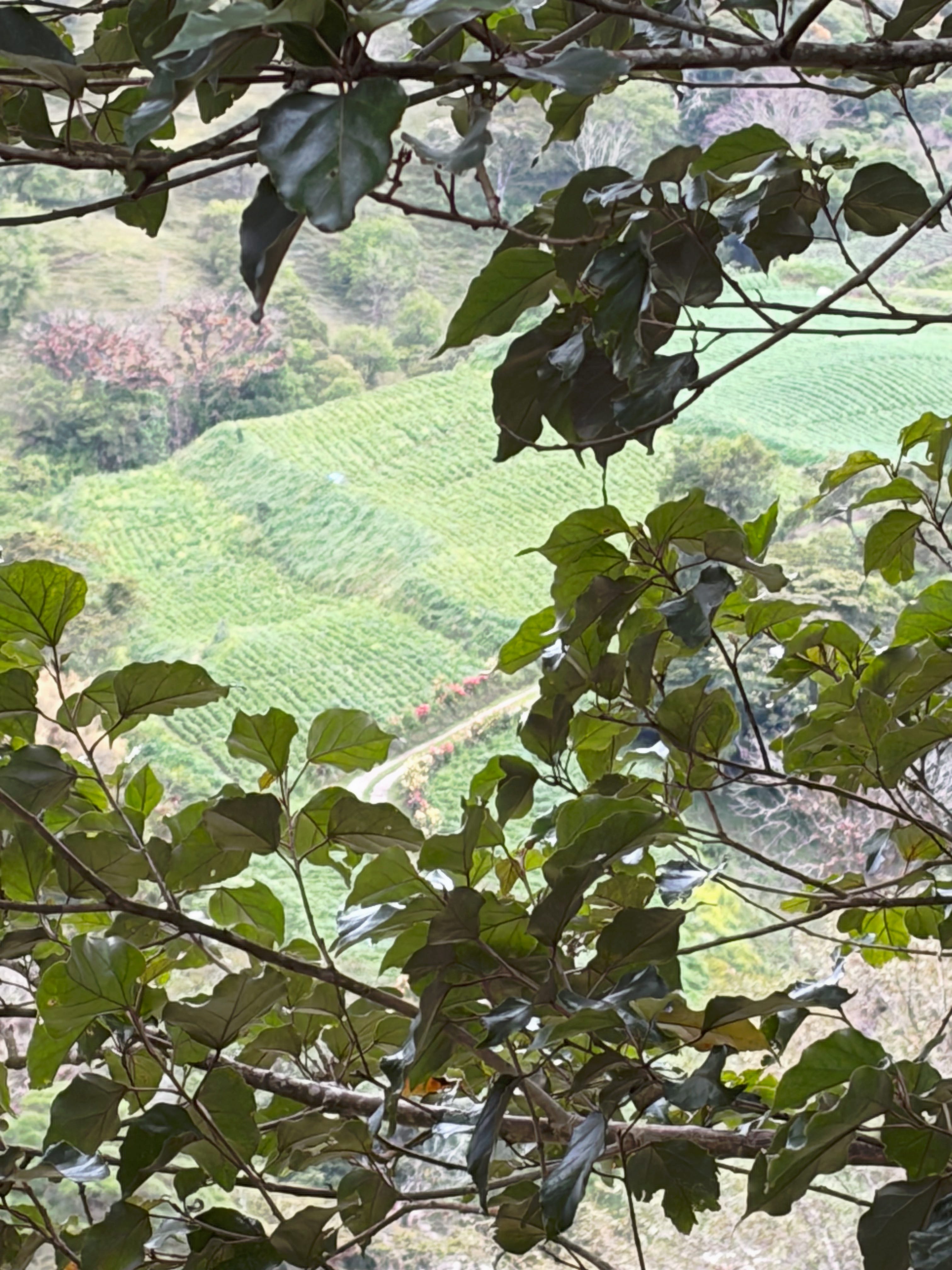
Marilyn and Lorraine were passionate about growing organic coffee, more to be a model for other farmers than as a commercial producer. And Marilyn was even more passionate about giving opportunities to the thousands of indigenous Ngäbe people whose labor made coffee farming possible in the region. Marilyn was very excited that it was the role of the Ngäbe in coffee production that I was most interested in hearing about. I thought she was going to hug me.
Panama has the second highest per capita income in Latin America but severe income inequality, with skyscrapers in Panama City looming over slums. In the mountains and along the remote Caribbean coast, over 90% of the Ngäbe live in extreme poverty, and 1/3 are illiterate.
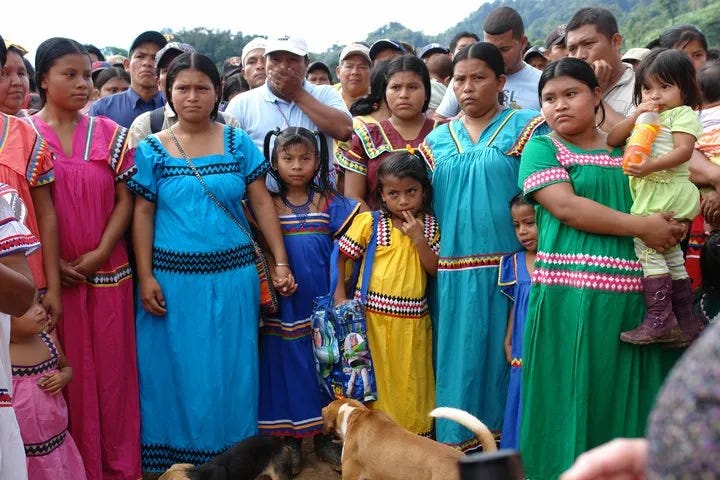
Very close to the beautiful two-night rental my wife and I had found above Boquete was a large coffee finca. Below this farm was a dingy, shabby migrant camp of shacks surrounded by a high, plastic-shrouded fence topped with barbed wire. Outside the gate to the camp, unsupervised boys crawled through a dirty drainage pipe as their playground. A barefoot girl in a traditional Ngäbe dress passed by inside.
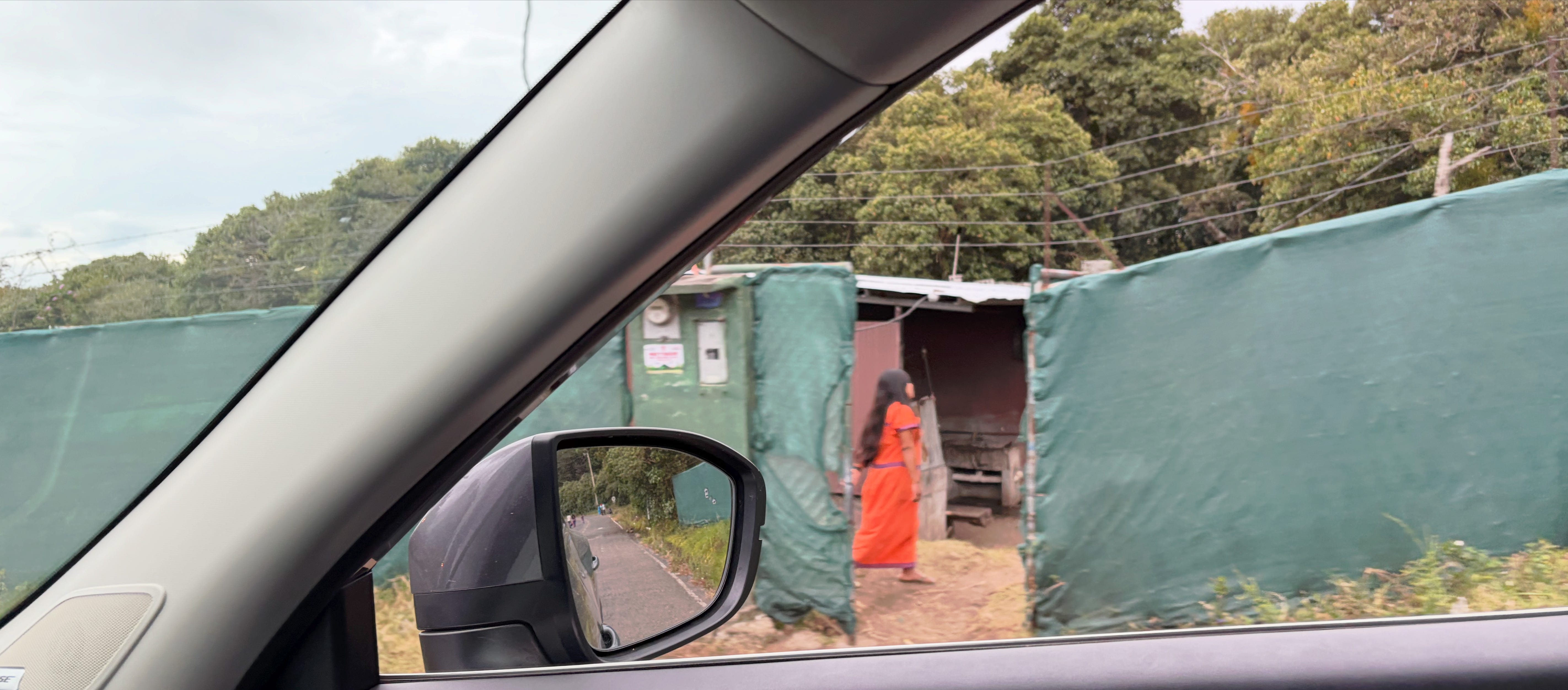
It was February and still the middle of coffee picking season.
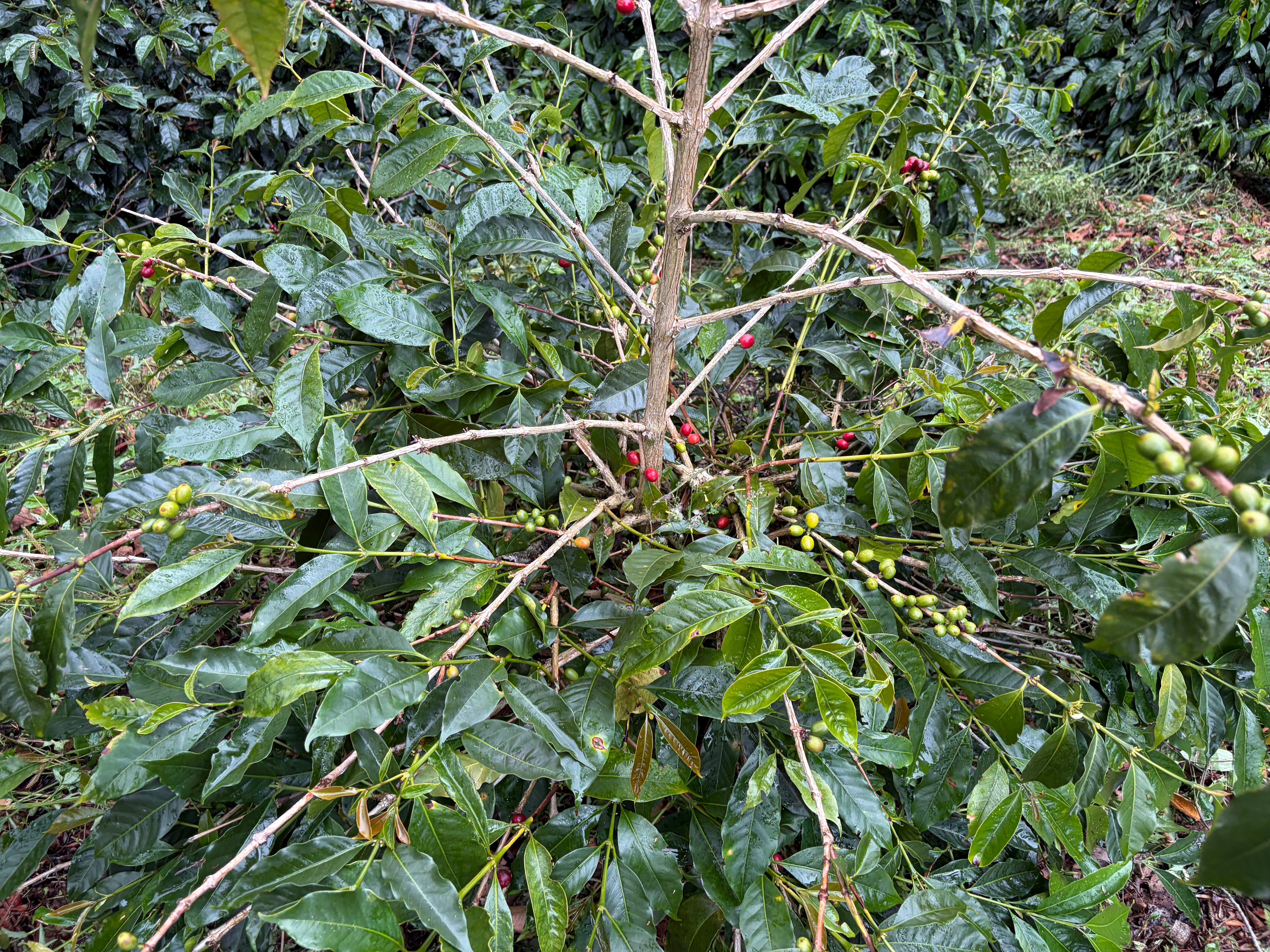
In the evening the camp was full of Ngäbe men and women and older children returned from the mountain slopes. The best pickers had spent a long day filling six to eight latas, 20 liter, or 5-plus gallon, containers, with ripe, red coffee cherries they had twisted one by one off the trees. Each full lata weighs about 30 pounds, but the bags of coffee cherries the Ngäbe carry weigh much, much more. Marilyn said they would receive $5 per lata, meaning a typical picker would earn about $25 and the quickest, hardest working about $40 per day.
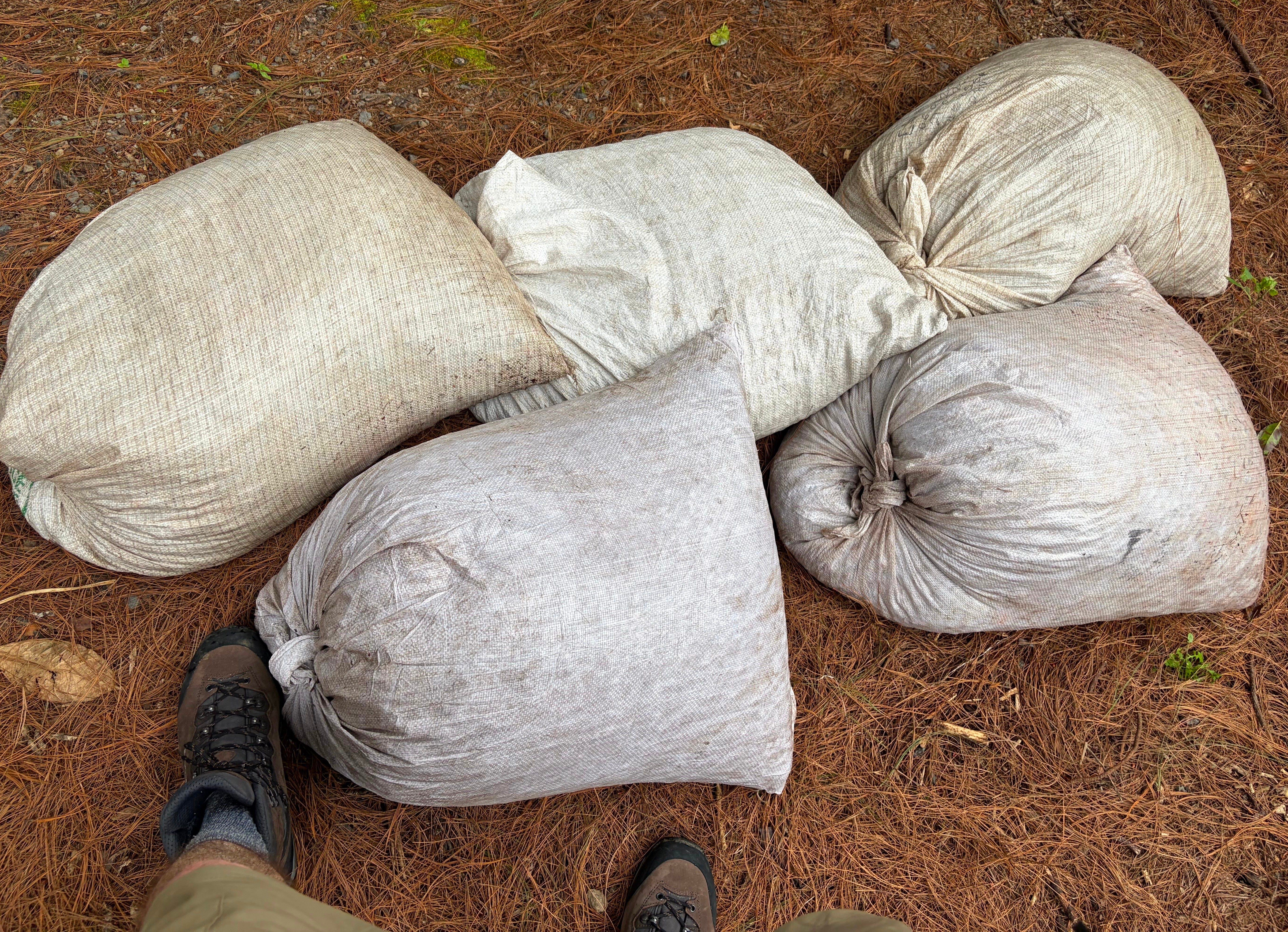
Most of the pickers had walked as a family to the Boquete fincas from their remote mountain homes where they subsistence farmed. Some live in the region and work year round on the fincas, earning $75 or $80 a week.
Every evening Ngäbe women, each with daughters dressed in colorful dresses bordered with patterned ribbons, climb the steep mountain roads around Boquete. They do not have phones. I don’t know where they are going.
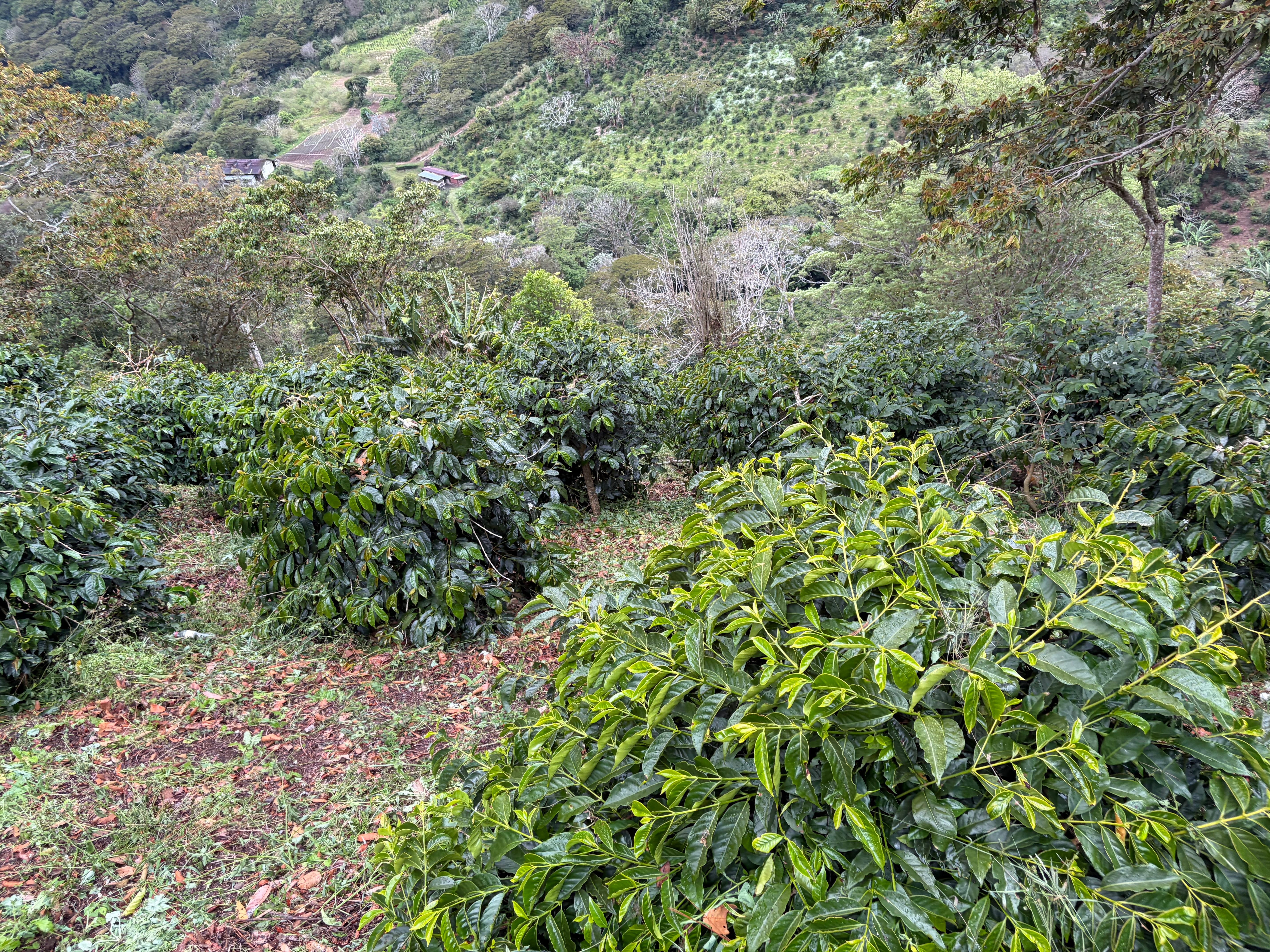
Eco Horqueta is Marilyn Monroe and Lorraine’s finca. Lorraine has built four cabins for guests. She and her husband, Pol Piñol, are European-trained chefs and prepare the meals. It is a beautiful spot, and the Eco Horqueta organic coffee is great. It’s a calm and quiet place to get away. Several dogs and cats occupy the sofa in the dining area.
The finca seems remote, but a taxi from Boquete will get you there in 20 minutes. I drove a Landcruiser up the narrow, windy mountain road, dreading an oncoming car would approach, since one of us would have had to back up a long way or come dangerously close to the edge to pass.
The Nagbe’s reported reluctance to talk to strangers outside the tribe was confirmed when I asked directions from three men waiting for a bus. None would look at me or answer my question, asked in Spanish. They may not have been Spanish speakers, but I knew they understood me when I asked for “Eco Horqueta.” It was two hundred meters away.
I don’t blame them. The Ngäbe picked a fight with Christopher Columbus on his fourth voyage and won, but have lost to the Spanish ever since.
The Boquete region is famous for its high-quality coffee, especially the $50 per pound Geisha, more than half the weekly wage of an Ngäbe farm helper. The coffee is good, but the people I met were better. I was lucky to have met the petite Marilyn Monroe and Lorraine, who came down from a luxury tower to go up into the mountains where I believe Marilyn will figure out ways to give a boost to Ngäbe children, the way she was lifted up as a child.
Thanks for reading and being a paid supporter of Eating In America. Your backing makes a big difference and is really appreciated.


