
Is “precision nutrition” Big Food’s next protein?
Protein is having its moment, with hundreds of ultraprocessed food manufacturers eager to sell you thousands of new products designed to provide the protein you may or may not be missing in your diet.
Will it be precision nutrition’s moment next?
Many of these same manufacturers and hundreds more are hoping to convince you it is time for precision nutrition to help us live longer and healthier. There could be a lot of money in precision nutrition: testing and analyzing us, prescribing food and supplements, and selling us those nutrition products.
Let me backup a second.
Nutrition science has reached a plateau, a level of maturity. Over the last hundred years, all the vitamins and minerals and many phytochemicals like the beta-carotene in carrots that supports eye and heart health, have been discovered and their roles sketched out.
We know what a healthy diet is now
We have flip-flopped a bit about the evils of fat and carbohydrate, but those debates have been about fixing the disease of obesity and not, if you listen to solid nutrition science, about what is required for a basic healthy diet.
So nutrition scientists now have a pretty good grasp on what humans need to eat and what we should avoid. Of course, there is much more to learn about the biology of nutrition, but the basics are in place.
It is the realm of policy’s turn to fix our nutrition
Improving population health through nutrition now falls mainly to the policy side, with the immense, but not impossible, task ahead of making, through education and, more importantly, through access, a healthy diet the natural, effortless default for everyone.
Individualized nutrition, new questions for scientists while new opportunities are seen by corporate interests
So, with the big picture for nutrition sketched out on the population level, meaning for the average person, some nutrition researchers are turning to the realm of precision nutrition, and studying how individuals might benefit from personalized recommendations about what to eat. These researchers are finding the open arms of commercial interests who stand to benefit from a possible new market of billions of individuals.
Two things give me great pause contemplating this new-ish idea of precision nutrition.
Here comes Big Food to usurp the science
First, it is worrisome that ultraprocessed food makers seem to be swooping in to fund and create science favorable to the concept of precision nutrition. Science funded by commercial interests produces, more frequently than not, research findings that benefit the interest of the funder. I am always suspicious of the results when I find financial or funding connections between scientists and industry.
“Precision” in relation to nutrition is a term I hope goes away
Second, the term “precision nutrition” is pretentious. It’s more a marketing buzzword than an accurate expression of a scientific endeavor. Proponents don’t actually think an individual’s precise diet should be prescribed. Instead, awkwardly, researchers who use the term acknowledge that there are big gaps in scientific evidence that preclude actual, wholistic precision in prescribing nutrition. This acknowledgement of the deficiency of evidence is meant to differentiate precision nutrition from personalized nutrition, which can be found marketed on the spectrum towards wellness products where evidence can be sketchy or non-existent.
It is time for precision or, better, “personalized” nutrition?
I am, in fact, very much in favor of the concept of precision or personalized nutrition, but only in a medically-valid implementation. I wrote an economic analysis, “Nutrition Counseling in Primary Medical Care,” in 2018, before I heard of the then nascent personalized nutrition.
Nutrition is all about health. Our medical system needs to own it.
The key is that personalized nutrition needs to be exclusively owned, managed, certified, provided, and insured medically. Personalized nutrition care, which can provide important medical benefit, cannot be left to unregulated ultra-processed food companies and social influencers.
What have I proposed?
Expert nutrition counseling should be provided as a regular part of primary care. Certified Nutrition Specialists or Registered Dietitians with an up-to-date approach would work closely with a PCP on patient obesity solutions and monitoring of GLP-1 use. Diabetes, blood pressure, and cholesterol support would be provided along with support for gluten intolerance and celiac disease. Testing of genetics, gut microbiome, glucose response, and blood would be recommended as needed. Diet, body size, age, activity level, sleep would be recorded. Analysis using AI would be interpreted in light of medical history and current conditions.
Either the right Registered Dieticians or Certified Nutrition Specialists will do
Registered dietitians are currently brought in to the clinical setting for some of this work, like diabetes management. And, today, Certified Nutrition Specialists are an alternative to Registered Dietitians, with rigorous education and clinical experience focused on personalized nutrition.
There is a case, based both on disease treatment and preventive care, to greatly increase and regularize nutrition care as part of primary care.
Personalized nutrition would be a great fit for universal health care
Of course, the current American insurance system will resist increased short term costs for nutrition care, given that there is no continuity of insurance as people age. An employer doesn’t want to pay upfront costs to prevent costly chronic diseases that might show up only after the individual has left the employer. A benefit of lifetime universal health care in the U.S., should we ever achieve it, would be that the savings created by cost-effective preventive care will always be returned to the system.
Personalized nutrition and technology
It is time for personalized nutrition to be integrated into our healthcare system. Many new tools such as GLP-1s, AI, genetic testing, gut microbe analysis, and inexpensive continuous glucose monitoring all radically increase the potential benefit of a competent personalized nutrition professional becoming involved in regular health care.
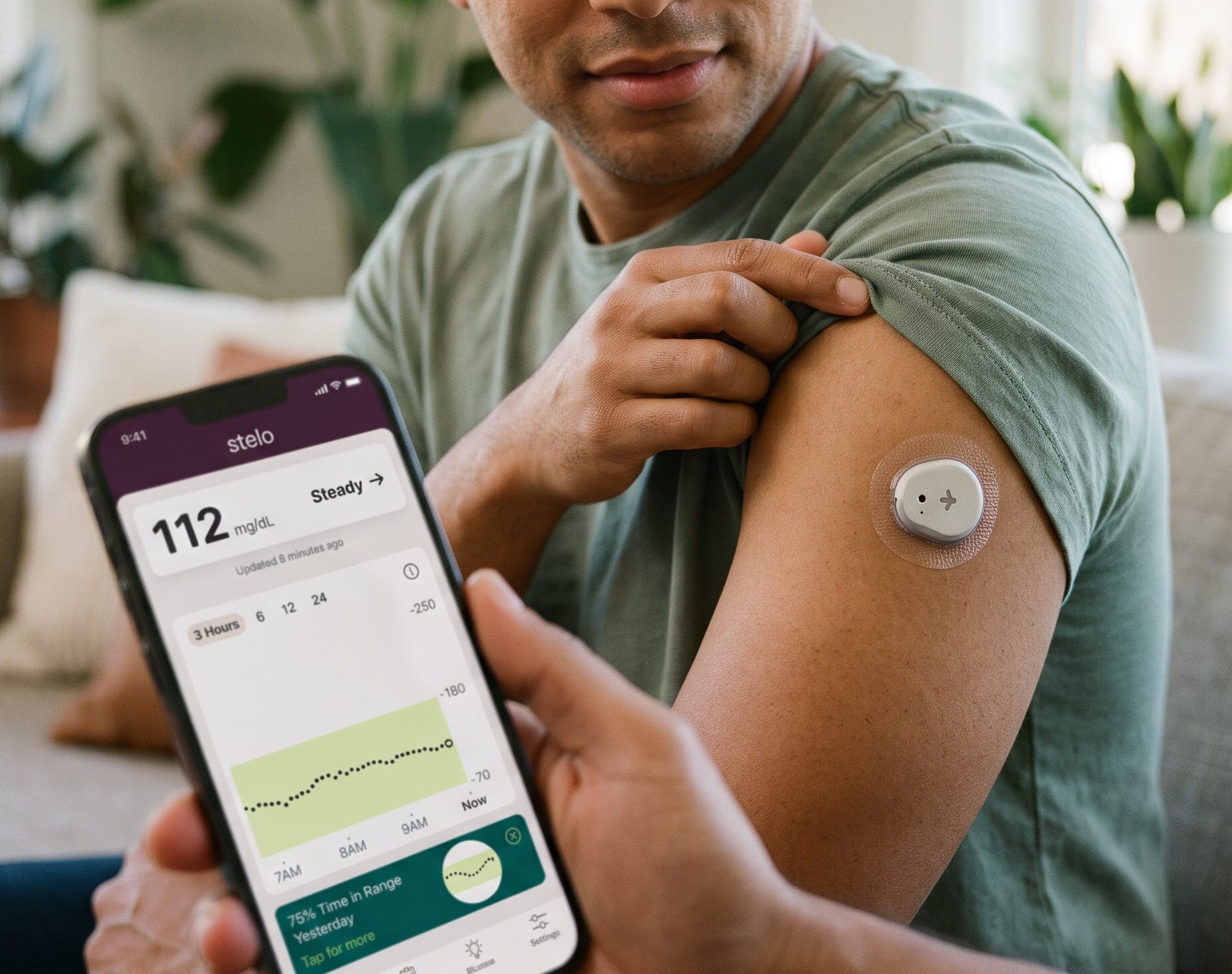
By the way, as an example of the quickly evolving technology that is bringing personalized nutrition forward as a rational addition to primary care, I’m in the middle of a two-week test of an inexpensive continuous glucose monitor. The small device is patched, almost imperceptibly, to my upper arm like a tiny cyborg-ian appliance. I wanted to see how my body responds to sugar and other fast-acting carbs. A Bluetooth-connected app on my phone gets a readout of my blood glucose level every five minutes. I am happy to report my blood glucose spikes are well-controlled.
The need for more nutrition expertise in the primary care setting has been recognized
Leaders in medical education, and, with a bipartisan Resolution in 2022, the House of Representatives have acknowledged that doctors don’t receive nearly enough nutrition training. To his credit, in his tenure as Health and Human Services Secretary, Robert Kennedy has worked to increase nutrition training for medical students, although some of his newly proposed nutrition competencies for doctors are ridiculous and based on pseudo-science. Cooking classes and understanding the relation of soil microbes to nutrients? There are better uses for a medical student’s time in the classroom.
Kennedy: half-right, again
Also, Kennedy’s efforts to improve the provision of nutrition care in the primary care setting did not include mention of the linking of the PCP office to a competent personalized nutrition professional, who could provide in-depth, cutting-edge nutrition care.
Technology creates both the opportunity and the need for personalized nutrition
It’s not just the technology advances like Ozempic and AI that make promoting the nutrition professional in the medical setting a timely idea. The need is urgent because technology itself that has made the food environment toxic to human health.
As a species we are thoroughly adapted, both genetically and culturally, to eat a wide, imprecise variety of food. When sufficient variety and quality is available, in combination with some tweaks provided by modern nutritional science, people do well on their own. But industrial processing of foods in the last two hundred years has changed that, and much of today’s health care and nutrition counseling is devoted to fixing ills caused by our food environment.
How to pay for this nutrition-enhanced primary care?
In line with the concept that Big Tobacco and opioid manufacturers should pay to cure the ills they have caused, personalized nutrition in the medical setting should get funding from taxes on ultra-processed food makers like PepsiCo, General Mills, and the rest of Big Food. Big Food created a problem causing ill health in our society, and now they want to double their revenue on the back end by profiting from supposed solutions. That should not be allowed.
Thank you for reading. You feed Eating In America’s growth with your subscription, paid or free, and your comments, shares, and likes. Thank you!
References
Berciano S, Figueiredo J, Brisbois TD, et al. Precision nutrition: Maintaining scientific integrity while realizing market potential. Front Nutr. 2022;9:979665. https://doi.org/10.3389/fnut.2022.979665
Sacks G, Riesenberg D, Mialon M, Dean S, Cameron AJ. The characteristics and extent of food industry involvement in peer-reviewed research articles from 10 leading nutrition-related journals in 2018. PLoS One. 2020;15(12):e0243144. https://doi.org/10.1371/journal.pone.0243144
Aspire. 3 Health & Wellness Brands with Highly Effective Influencer Marketing Strategies. 2026. https://www.aspire.io/blog/health-wellness-brands-influencer-marketing-strategies
American Nutrition Association. Pathway A: Nutritionists & Health Professionals. https://www.theana.org/pathway-nutritionists/
U.S. Health and Human Services Department. Medical Education Nutrition Competency Framework. 2026. https://www.hhs.gov/sites/default/files/nutrition-competencies-framework.pdf
Eisenberg DM, Cole A, Maile EJ, et al. Proposed Nutrition Competencies for Medical Students and Physician Trainees: A Consensus Statement. JAMA Network Open. 2024;7(9):e2435425–e2435425. https://doi.org/10.1001/jamanetworkopen.2024.35425
Ordovas JM, Ferguson LR, Tai ES, Mathers JC. Personalised nutrition and health. BMJ. Jun 13 2018;361:bmj.k2173. https://doi.org/10.1136/bmj.k2173
Bush CL, Blumberg JB, El-Sohemy A, et al. Toward the Definition of Personalized Nutrition: A Proposal by The American Nutrition Association. Journal of the American College of Nutrition. 2020/01/02 2020;39(1):5–15. https://doi.org/10.1080/07315724.2019.1685332


