
Are you one of the 300 million Americans who together spend $23 billion to eat breakfast cereal each year? Is there nostalgia in that bowl or just a pleasant-enough dose of food to push you out the door in the morning?
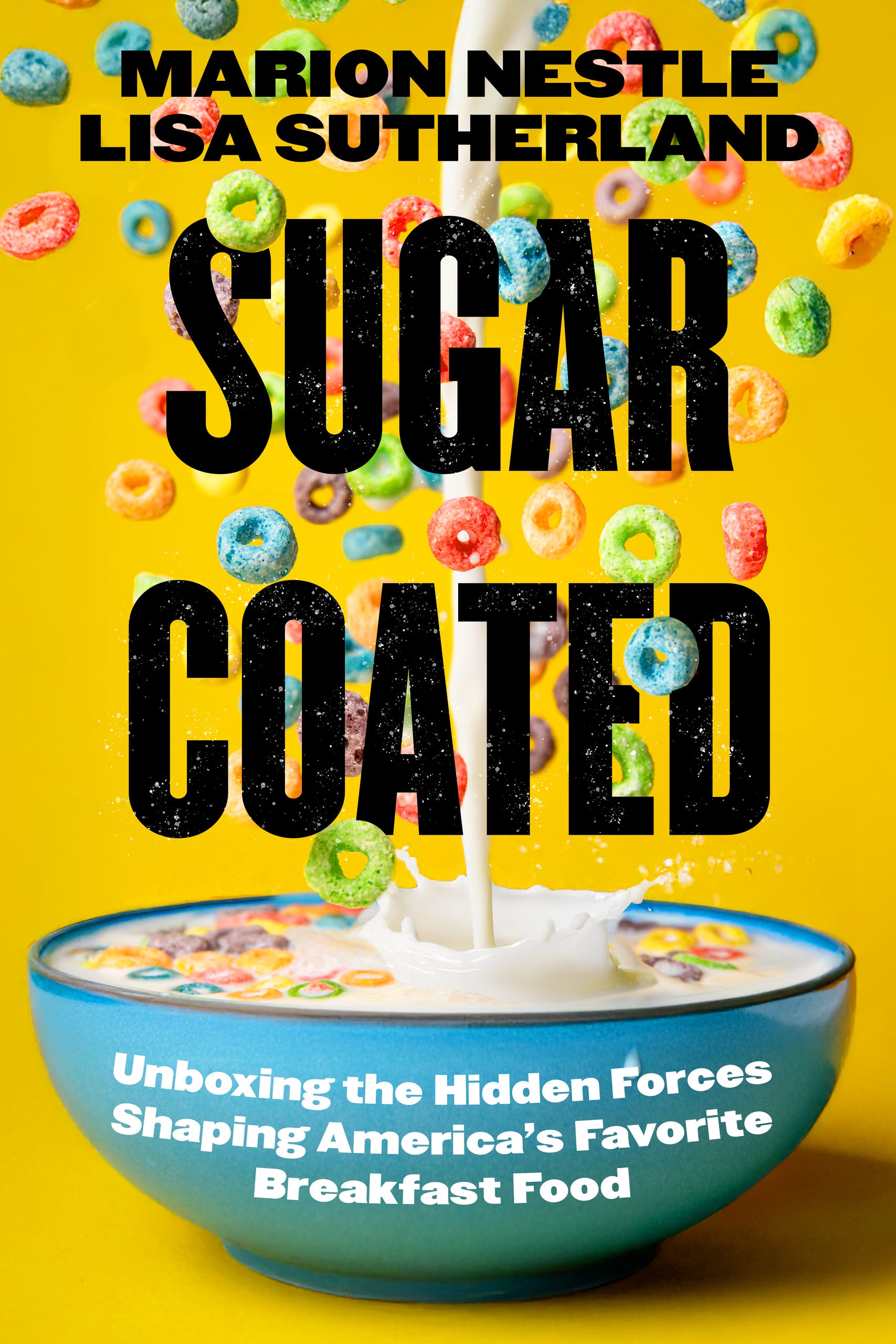
Marion Nestle and Lisa Sutherland’s new book, Sugar Coated, Unboxing the Hidden Forces Shaping America’s Favorite Breakfast Food, is a not-sugar-coated history of the invention and evolution of cereal in America, inspired by and told through an extraordinary collection of Kellogg cereal box reproductions dating back to 1919 and given to Nestle by Kellogg in 2010. Nestle and Sutherland, who was Vice President for Nutrition at Kellogg at the time, understood immediately that these artifacts embodied - and displayed in bright colors - a macro case study of the way processed food has been marketed in the United States in the last hundred years.
Granula, the sanctified but inedible beginning
As Nestle and Sutherland recount the history, the first granola was created in 1863 in a sanatorium in western New York. “Granula,” as it was called, was inedible unless it was soaked overnight.
Nonetheless, the idea for the whole grain breakfast food was quickly appropriated by two brothers, the Kelloggs, who added a moralistic wrapper as they served it along with the beliefs of the health and nutrition conscious Seventh-Day Adventist Church. C.W. Post, of the soon to be Postum Cereals, helped in the kitchen of the Kelloggs’ sanatorium in Battle Creek, Michigan where Post also, let’s not sugar coat it again, appropriated stole the idea of a healthy whole grain cereal.
Snake oil and whole grains
By the turn of the century, the shift from pulpit to profit was complete in the cereal market and soon 100 cereal makers populated Battle Creek. In 1906, health-promising snake oil sales were at their peak in America, but purchases of genuinely healthy cereal were taking off, albeit with the help of snake-oil-like health claims such as Postum Grape-Nuts’ “rebuilds the soft gray matter in your brain.”
Cereal had already been industrialized with extrusion and crushing processes that break the whole grains down into a more digestible form. Some cereal makers in Battle Creek were adding barley malt to sweeten their products, but the elder Kellogg, Dr. John Harvey, was adamantly opposed to sugar in the diet. The younger W.K. Kellogg saw great wealth in the future, however, and in 1906 added cane sugar to the new Kellogg’s Corn Flakes. The road to the prominence of breakfast cereal as a highly- and ultra-processed food in our culture was paved.
The cereal industry’s manipulation of … everybody
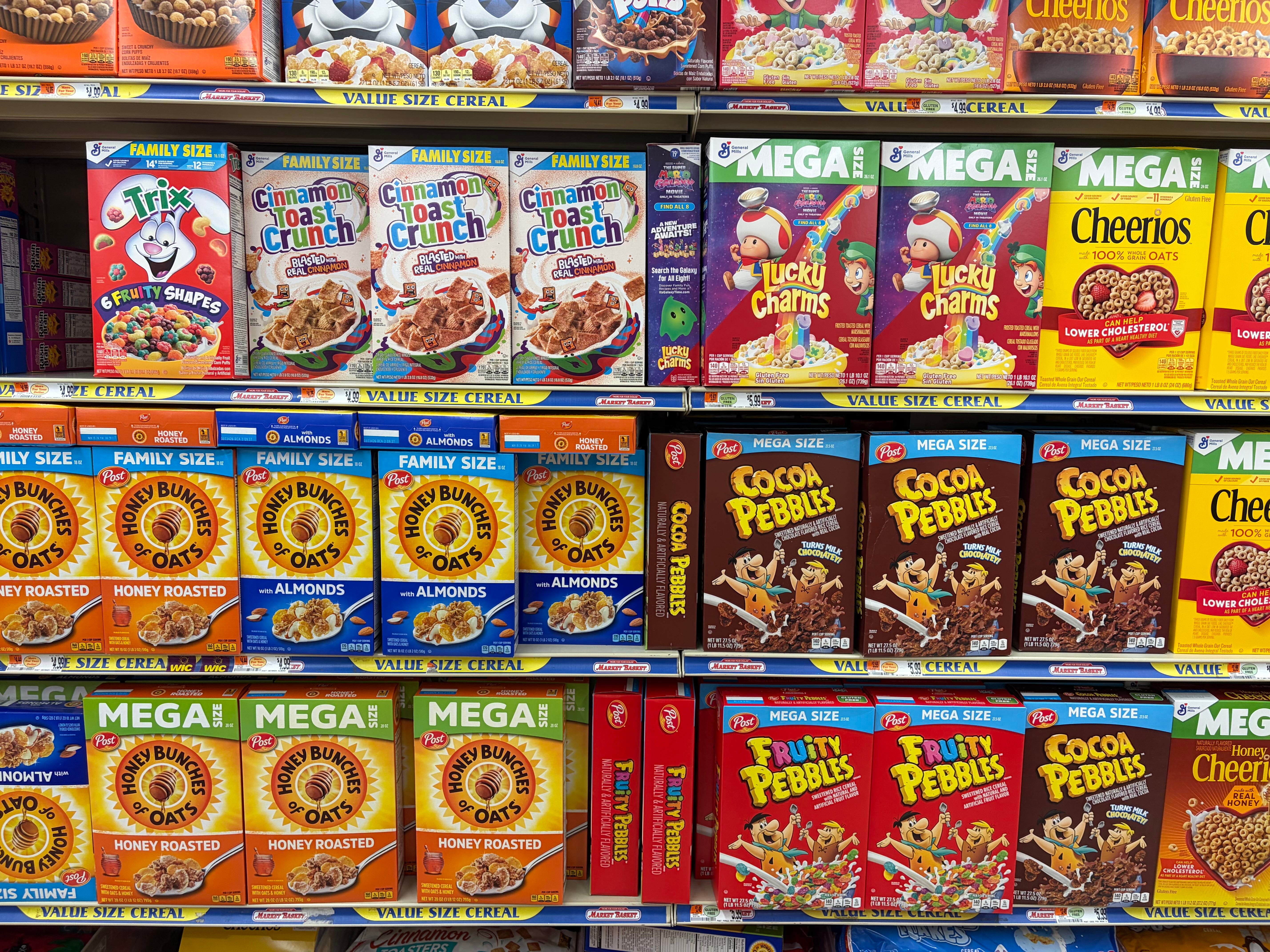
In Sugar Coated, Nestle and Sutherland carefully lead us through formulation of cereals over time with the addition of artificial colors, vitamins, minerals, fiber, protein, artificial sweeteners, and, of course, sugar, and lots of it. The book thoroughly and frighteningly tracks the industry’s manipulation of the Food and Drug Administration for food and labeling standards, the Federal Trade Commission for commercial advertising, academia and the nutrition research community for production of the supporting science, along with the USDA and Congress for laws and policies, all to help avoid or reduce regulation and gain license to market in ways that would best promote cereal sales.
Health claims, laughable and cringeworthy
The authors by turn amused and enraged me in sorting out the confusing and contentious history of health claims on cereal boxes, from the reasonable “avoids constipation” of the Kellogg 1919 All-Bran to the icky-sticky endorsement of the America Diabetes Association on boxes of Post’s sugary cereals.
Sugar Coated is bound to be frequently cited for detailing the way the industry has doggedly pursued its marketing goals, through managing to get government regulations changed, creating self-imposed regulation to deflect government efforts to regulate, or just ignoring the rules, often paying the penalty in court while reaping the bigger benefit in sales. Other writers will undoubtedly extend the lessons of Sugar Coated to help examine and link the tactics of highly- and ultra-processed food segments and other industries which market addictive or regulated substances. (I include sugar as an addictive substance, a conclusion W.K. Kellogg himself might have intuited.)
Sugar as the essence of cereal’s rise to be a keystone of the diet of many Americans
As the name Sugar Coated implies and Nestle and Sutherland convincingly detail, sugar has long been the essential ingredient for the success of breakfast cereal, as well as one of the key battlegrounds in regulatory and court struggles. The unhealthiness of added sugar is also the reason that the behavior of the Big Four cereal makers in targeting children is unethical. Of the four giants, General Mills, Kellogg, Post, and Quaker Oats, it is no coincidence that Kellogg, now split into W.C. Kellogg for North America and Kellanova for the rest of the world, is owned by Ferraro, the Italian candy maker, and Mars, the American candy maker. Quaker Oats is also owned by a sugar-centric food maker, PepsiCo.
Candy for the breakfast of kids as a new norm
With marshmallows, chocolate, and candy-names in and on our cereal, we live in a food environment where candy is promoted for breakfast and breakfast is marketed as a sugary snack for eating throughout the day. The authors’ incense at the TV ads, cartoon characters, in-box prizes, colored cereals in unusual shapes, and other marketing tricks that drive the buying of sugar-laden cereal for children is restrained but palpable.
The idea of stop signals to warn us
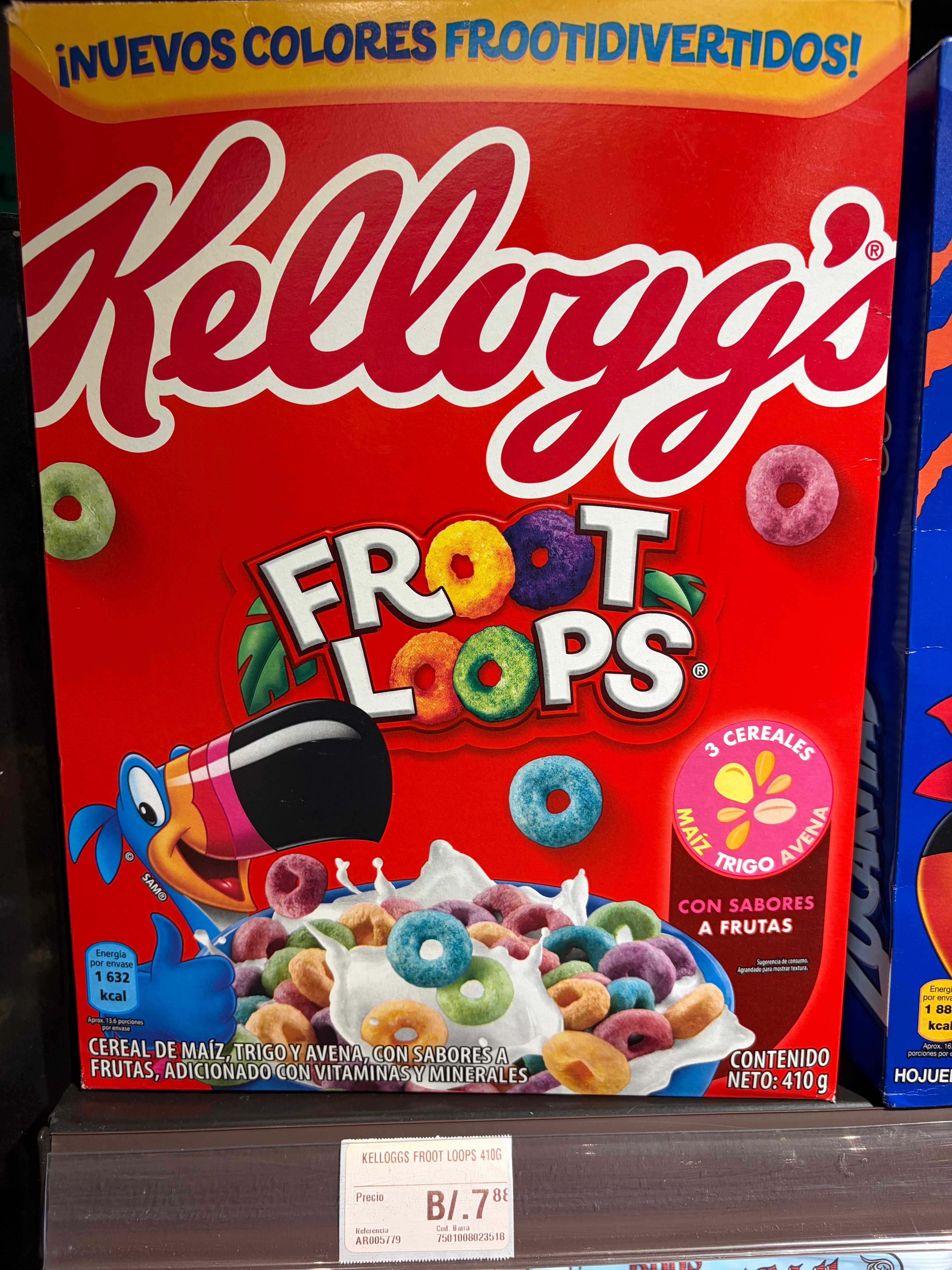
Change is coming in other parts of the world and Nestle and Sutherland provide examples. The most important and potentially achievable change the authors describe would be the addition of an instantly understandable and nutritionally-sound front-of-box indication of the healthiness of the cereal or other processed food product being examined. This consumer-friendly heads up has been enacted in the form of octagonal stop-sign shaped warnings in the majority of countries in South America and has greatly reduced sugary cereal sales there. Our Secretary of Health and Human Services and the Make America Healthy Again leader, Robert F. Kennedy, Jr., has advocated for perhaps the strongest choice for such a warning system, red-yellow-green light icons. Of course, after reading Sugar Coated, we shouldn’t be left with any delusions about the forces the Big Four and the rest of the highly- and ultra-processed food industry are bringing to bear to fight back against RFK, Jr.’s idea.
Happy birthday, Marion Nestle!
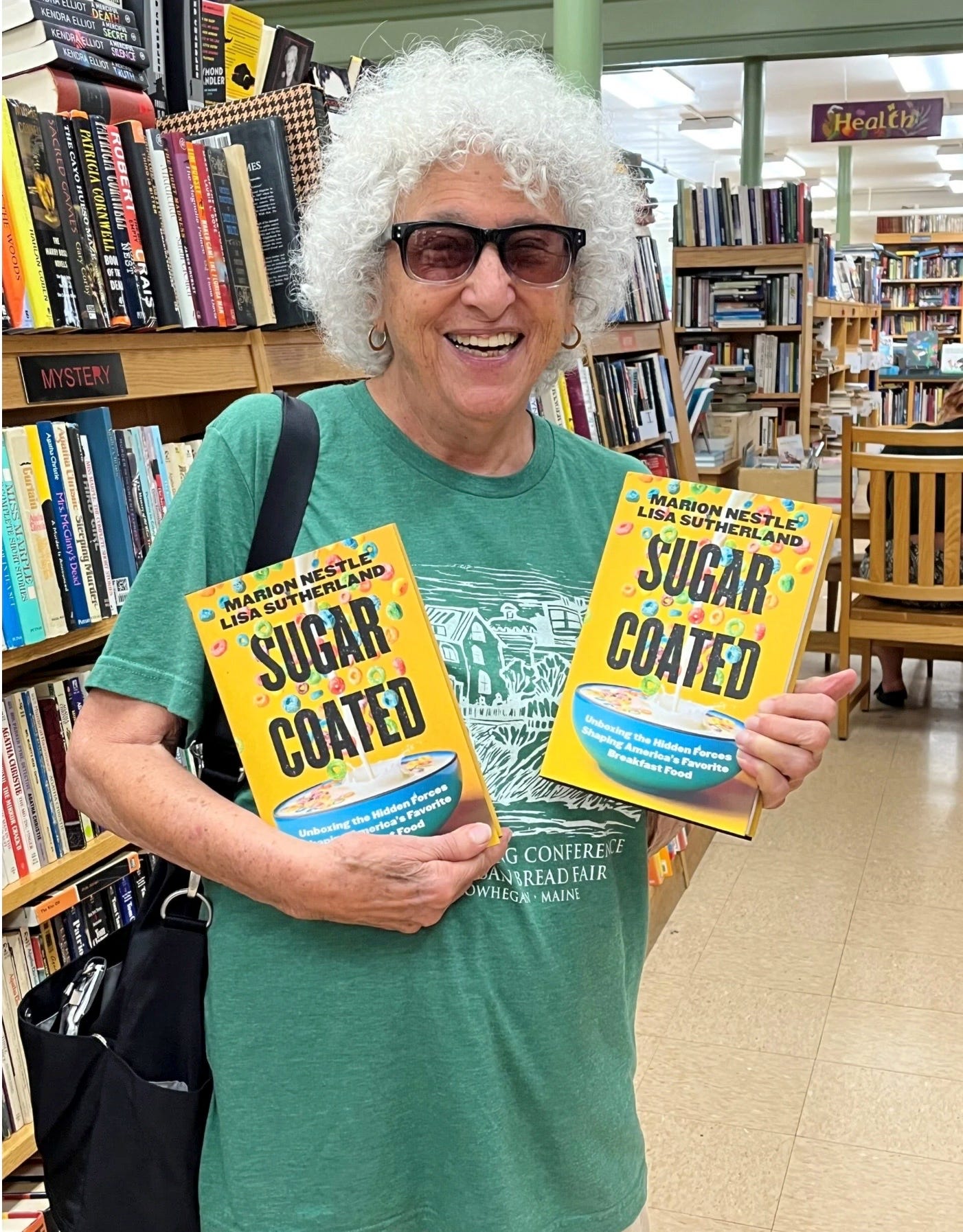
Look at the photo and guess how old Marion Nestle is. This week she celebrated a birthday that ends with a zero.
You probably guessed 70th and would be in disbelief that it was her 80th, but it was actually Nestle’s 90th. Where does the impressive nutrition advocacy, book-producing, interview-giving, lecture-delivering, FoodPolitics.com post-writing energy come from? Good luck, but also good nutrition, Nestle says.
Happy birthday and thank you and Lisa Sutherland, for this perfect insight into the way Big Food markets, lobbies, and formulates its way onto our tables with the only consideration of healthiness being the ultimate effect on the bottom line.
In two weeks, we’ll set Nestle and Sutherland’s Sugar Coated cereal story in the context of the other choices made in the morning by Americans. It will be Breakfast in America on Eating in America. Please join me then and every week at EatingInAmerica.co.
Thank you for reading and your support of Eating in America through your subscriptions, comments, and likes.


