
Every day, unless we are in very bad circumstances, we drink water. In today’s America we are lucky to have wide accessibility to what we almost always consider safe drinking water, while for much of the world obtaining clean water is often a struggle.
Contaminated water is the transmission pathway for many bacterial, viral, and parasitic diseases including cholera, typhoid fever, hepatitis A, norovirus, polio, and more. Vaccines, like the polio vaccine, and public water and sewer systems have eliminated or greatly reduced most water-borne risks for most people, and cholera has not been epidemic in the U.S. since 1866 due to our government’s delivery of public health measures. However, in parts of the world the seventh cholera pandemic, which started in 1961, still infects about a half-million people annually and is the seventh largest pandemic ever in terms of lives lost, which may be over 9 million and growing, 65 years into the pandemic.
We’re generally lucky in America, but not everyone has access to the best public health here, and our systems are vulnerable. For example, at last count, we are experiencing an outbreak of over 11,500 reported cases of cyclosporiasis in the U.S.
The story of Snow, cholera, oysters, pandemics, and miasma
Today I’m telling the tale of how a great disease detective, John Snow, put the clues together to save perhaps thousands of lives in the 1854 cholera outbreak in London. Snow became the father of epidemiology, the science of disease source detection that has saved millions of lives.
And I’ll talk about water-borne disease in America today; oysters, yum or yuck, however you feel; how measles got to be as rare as cholera in America; and that we need to acknowledge, as we face the corruption of our public health systems, funding, and status in the U.S., that we remain susceptible to very bad pandemics.
Plus, I’ll reflect on how the rejection of the evidence by the authorities after Snow’s discovery of the source of the 1854 cholera outbreak is similar to today’s rejection in America of science and proven public health measures.
It all ties together, believe it or not.
Welcome to new subscriber, Ming Yang, Senior Editor for Nature Medicine, and author of the excellent Health Checks on History Substack. Check it out. Londoner Yang knows well the history of the important site we will visit in the podcast today.
The first epidemiologist
John Snow was born in poverty in a neighborhood close to the river in York, England, the son of a coal yard worker and eldest of nine children. Drinking water in the neighborhood was from wells or the polluted river. The unsanitary conditions he experienced growing up likely informed Snow’s later cholera investigations.
Snow’s aptitude for learning won him an apprenticeship with a surgeon-apothecary, giving him five years of clinical training leading to education and certification as a surgeon able to practice medicine. In 1836, Snow entered the University of London to be become an actual doctor. It was there he made his first important epidemiological discovery, although epidemiology had not yet been named as a science.
Snow’s first epidemiological discovery (about arsenic, not cholera)
While performing post-mortems on dead patients with fellow students, Snow noticed that some of his colleagues were becoming sick. Snow deduced that the arsenic used to preserve many of the bodies was causing the illness and published a paper to that effect.
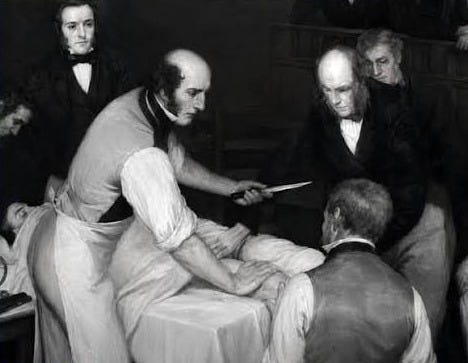
The University discontinued the use of arsenic to preserve corpses for dissection and the medical students stopped getting sick. Snow’s article also caused arsenic to be removed as an ingredient of candles, which burned brighter with some arsenic in the wax but put off toxic fumes.
Snow finished his medical degree in 1843 and would thereafter be titled Doctor.
A pioneering anesthesiologist
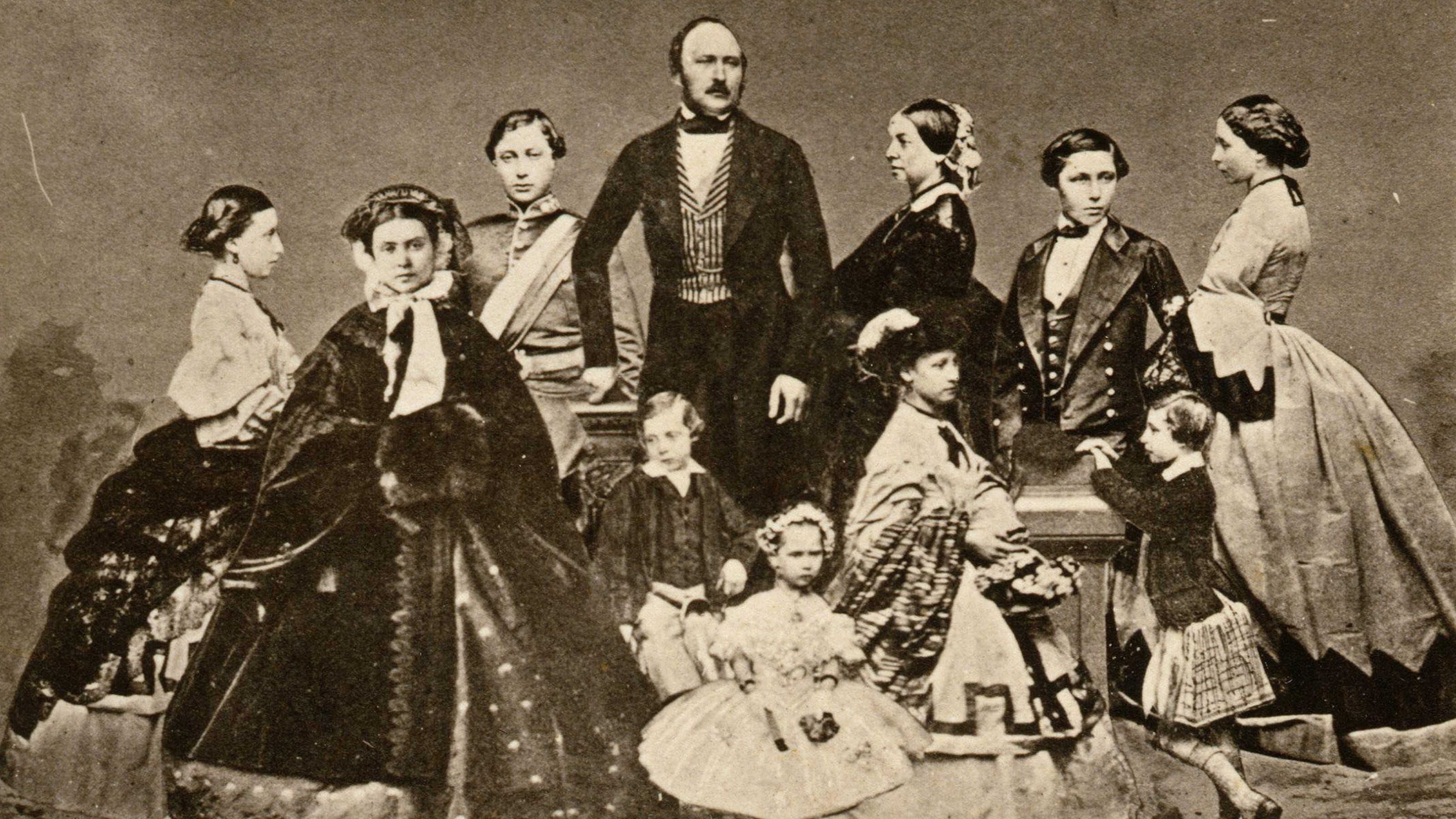
Snow is known for his epidemiology, but anesthesiologists know Snow because of his pioneering research to safely administer ether and, later, chloroform. His reputation as London’s top anesthesiologist was solidified when Queen Victoria insisted Snow administer chloroform to her for the birth of the last two of her nine children.
But it was Snow’s work on understanding, mapping, and eliminating the source of the cholera outbreak in the Soho section of London in 1854 that is most acclaimed.
Cholera came to England from the Ganges delta in India in 1831, starting the first of four English epidemics. In 1848, the second and most fatal cholera epidemic, with over 40,000 deaths, was manifesting itself in London. The prevailing view of scientists at the time was that transmission of cholera was in something called miasma, essentially the bad smell that accompanied unsanitary conditions. Snow understood how respiration worked from his experience with anesthesia and realized that if it cholera was carried in the air, people who worked in the worst smelling places like slaughterhouses and emptying cesspits, would be the most prone to get sick. That wasn’t happening.
Snow and others formed the London Epidemiological Society, meeting first in 1850 at the end of the second cholera epidemic. The new Society was committed to understanding not only cholera, its primary motivation, but to working on other diseases, including smallpox and smallpox vaccination, a topic on which it was very influential with the government. For my fellow epidemiologists, it’s worth noting that some members of this new group also belonged to the Statistical Society of London, which had been formed in 1832.
So the drive to solve the mystery of cholera gave birth to a whole new science, just in time to address the third epidemic, where its methods would result in the saving of many lives. Epidemiology today employs sophisticated mapping and statistics and toxicological testing. All three of these fundamental techniques were integrated by Snow in two groundbreaking investigations of the third cholera epidemic.
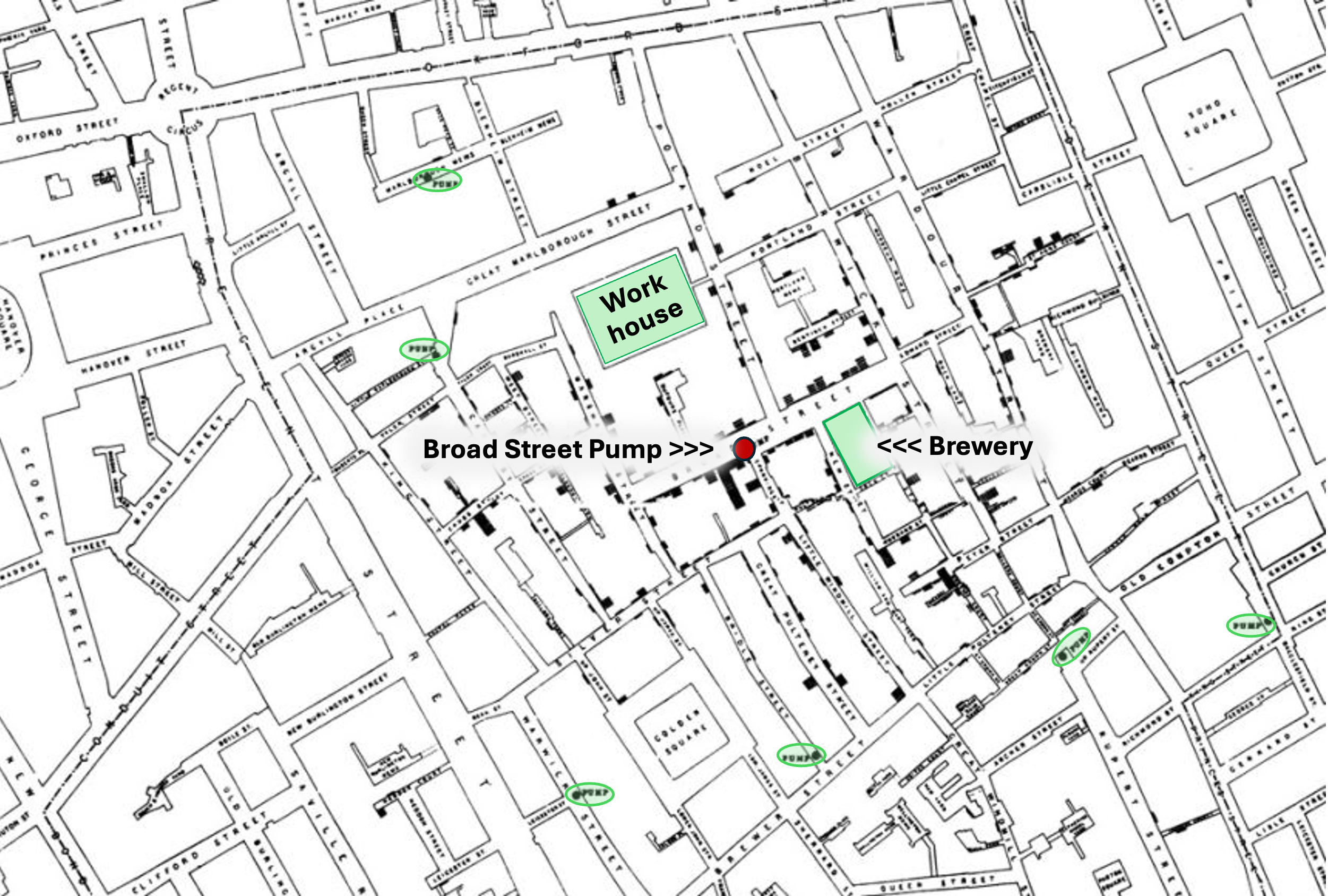
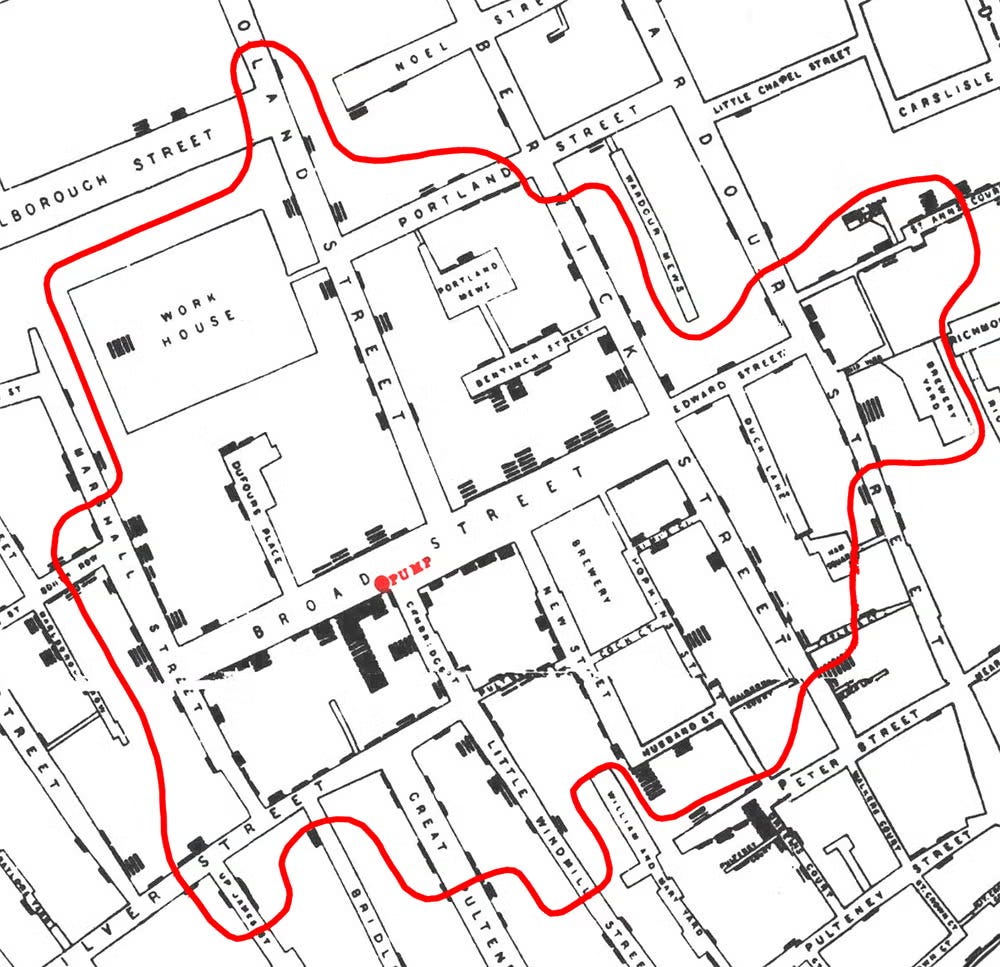
Around September 1st, 1854, at word of a sudden outbreak of cholera deaths in the Soho neighborhood where he had his office, Snow leapt into action, quickly obtaining the addresses of the first 83 fatalities, which he went to visit. Snow noticed they were all within a short distance of a communal water pump on what was then called Broad Street. Snow immediately suspected the pump as the source of infection.
Porter beer was the Gatorade of 19th century London, except probably better for you
The doctor interviewed many of the families of the deceased, finding 61 that had definitely or likely drunk water from the pump. Snow noticed that there were only a few deaths of workers from the brewery near the pump. The brewery owner told Snow that the workers received a daily allotment of porter beer to take home, the low-alcohol dark beer being a popular and safe hydration alternative to the available water. Also, the brewery had its own water well the workers could use.
Wait a minute, beer used for hydration? Doesn’t alcohol cause dehydration? Yes, generally, but with the low 2% to 3% alcohol content of the working-class’s porter, the body retains more water than it loses from the diuretic effect of the alcohol. Plus, the hard-working porter drinkers got significant calories from the beer as well as important B-complex vitamins.
Adding to Snow’s growing evidence, just around the corner from the pump was a workhouse, a horrible, jail-like, last resort for people who were poor or disabled. Snow found a water well within the workhouse grounds and only five cholera deaths among the 535 workhouse inmates. His Broad Street pump theory was further supported.
Snow sought toxicological evidence and had the pump water examined under a microscopic. Flaky organic matter was found, but otherwise the results were inconclusive.
Microscopy at the time could not easily see some transparent microbes like the cholera bacterium, Vibrio Cholerae. As it happened, an Italian professor, Filippo Pacini, identified the rod-like bacterium, called a bacillus because of its stick shape, in the 1854 Italian epidemic. But Pacini’s findings were not widely read, including not by the famous German bacteriologist Robert Koch, who went to Egypt during its cholera epidemic in 1883 and identified the Vibrio Cholerae bacillus in corpses.
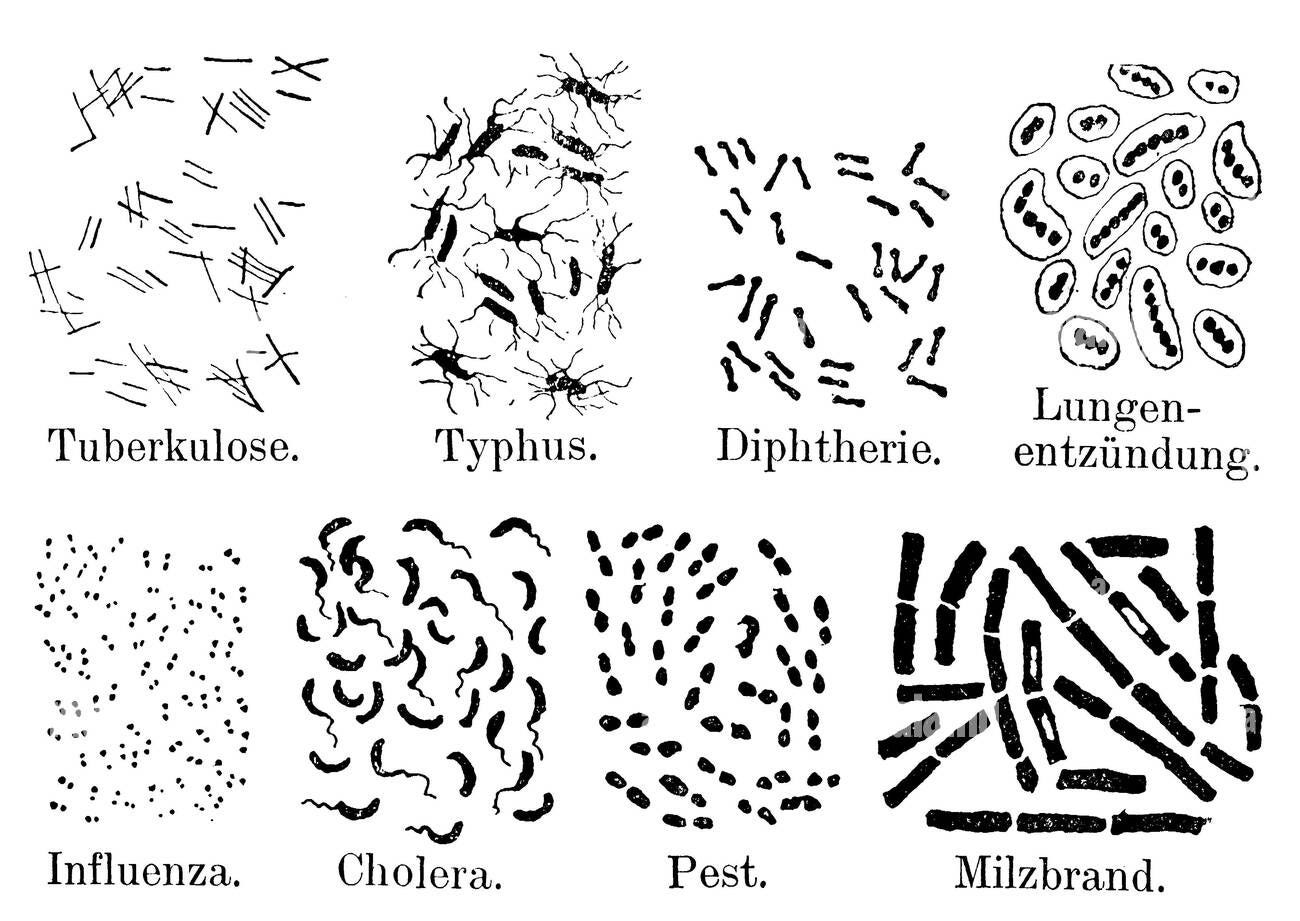
Koch’s widely disseminated findings convinced the scientific world that a bacterium was the agent of cholera and put nails in the coffin, as it were, of the miasma theory.
By Snow’s account, three-fourths of the residents quickly fled the neighborhood of the Broad Street pump soon after the onset of the outbreak with its hundreds of deaths. But many remained, and when Snow took his evidence to the local authorities, he managed to convince them to remove the pump handle
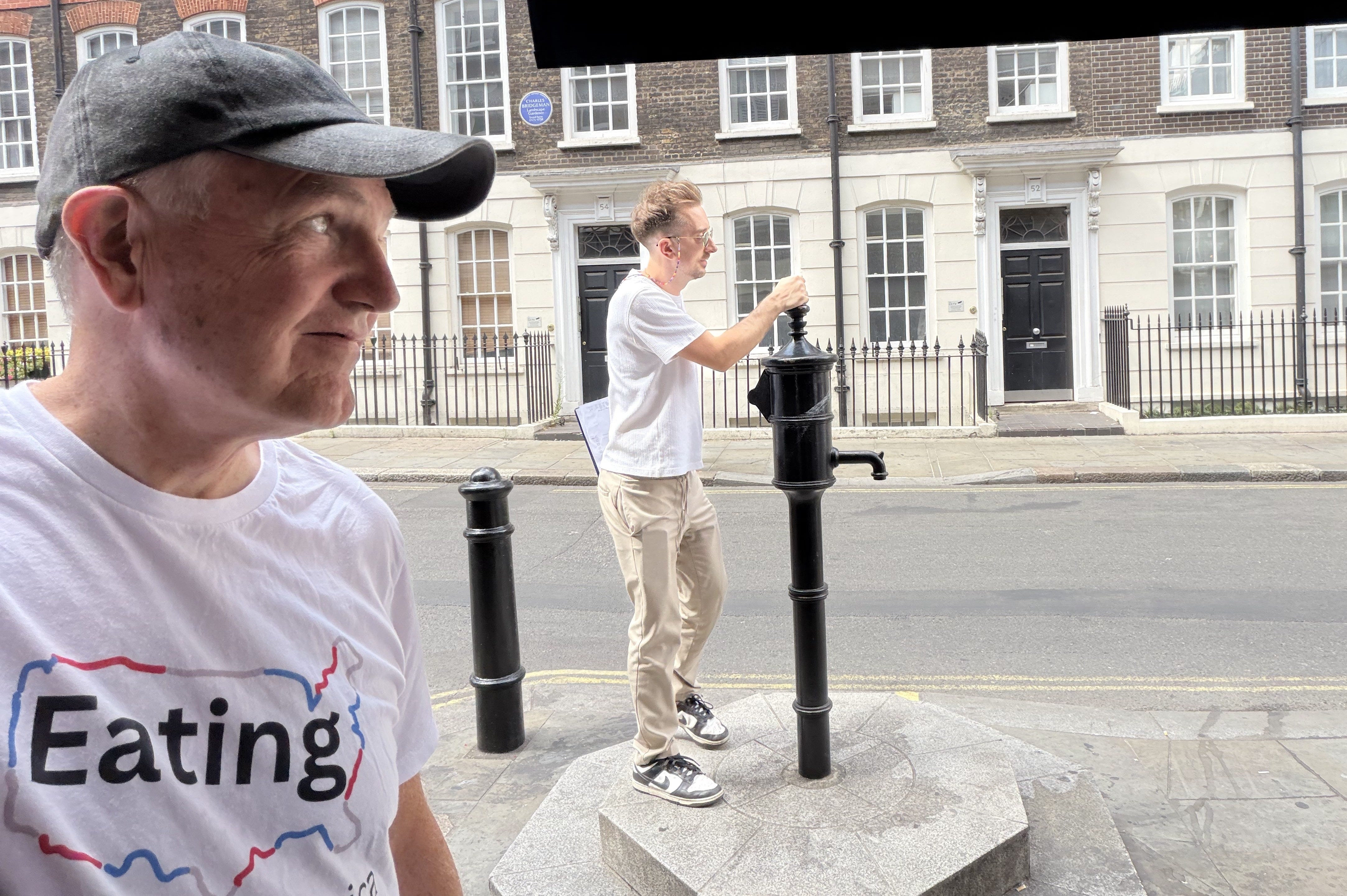
With no more water flowing, there were no more infections and the worst of the deaths ended within ten days, as those already sick at the time of the handle removal had either died or were destined to survive.
Following the Broad Street pump investigation, Snow continued that same year with his second and larger epidemiological study of cholera, which he called the “Grand Experiment.” Snow tallied the cholera deaths in 32 districts of London. The Lambeth Company supplied neighborhoods with water from the Thames above London, and the Southwark and Vauxhall Company supplied water from the Thames below where sewage was discharged in London
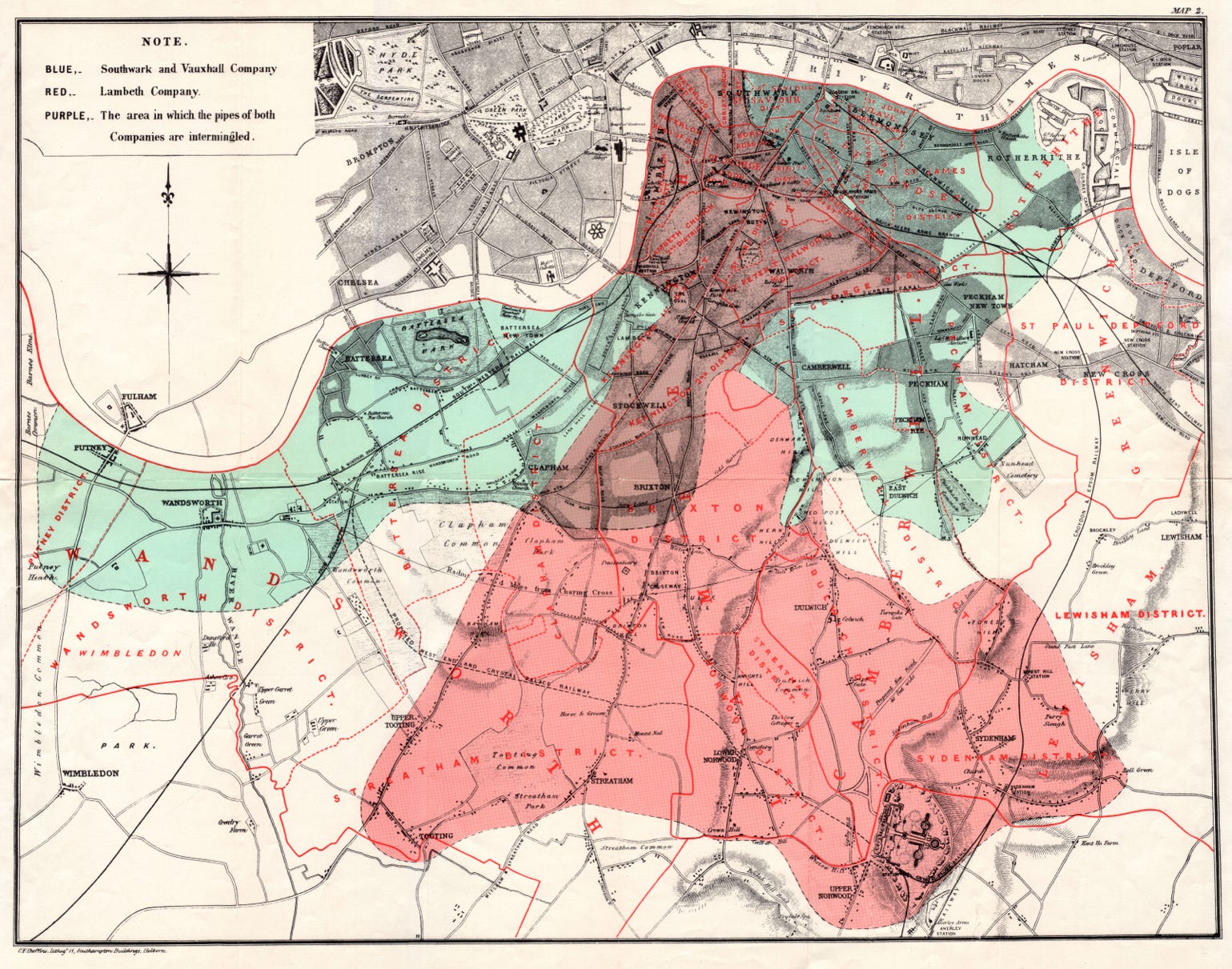
Snow’s statistics and map showed that the homes and community pumps supplied with water from the upper Thames had a low risk of cholera and few cases, and those supplied with heavily polluted water from the Thames within London had a high risk of cholera and many cases.
Unfortunately, even with the additional hard evidence of the second study, the higher authorities and most scientists were still not persuaded to give up their miasma theory. It was not until the fourth and final English epidemic in 1866 that polluted water was finally accepted as the primary source of cholera.
Unfortunately, Snow died of a stroke before the truth of his findings was accepted. He was a 45-year-old vegetarian and teetotaler when he passed a few years after his Broad Street pump investigation. Perhaps his experiments perfecting anesthesia, which had exposed him to large amounts of toxins, contributed to his early death.
Snow chronicler Michael Ramsay points out that while the doctor was never honored with a knighthood, he did receive the next highest honor for an Englishman and had a pub named after him, although ironically, as I said, Snow was an abstainer.
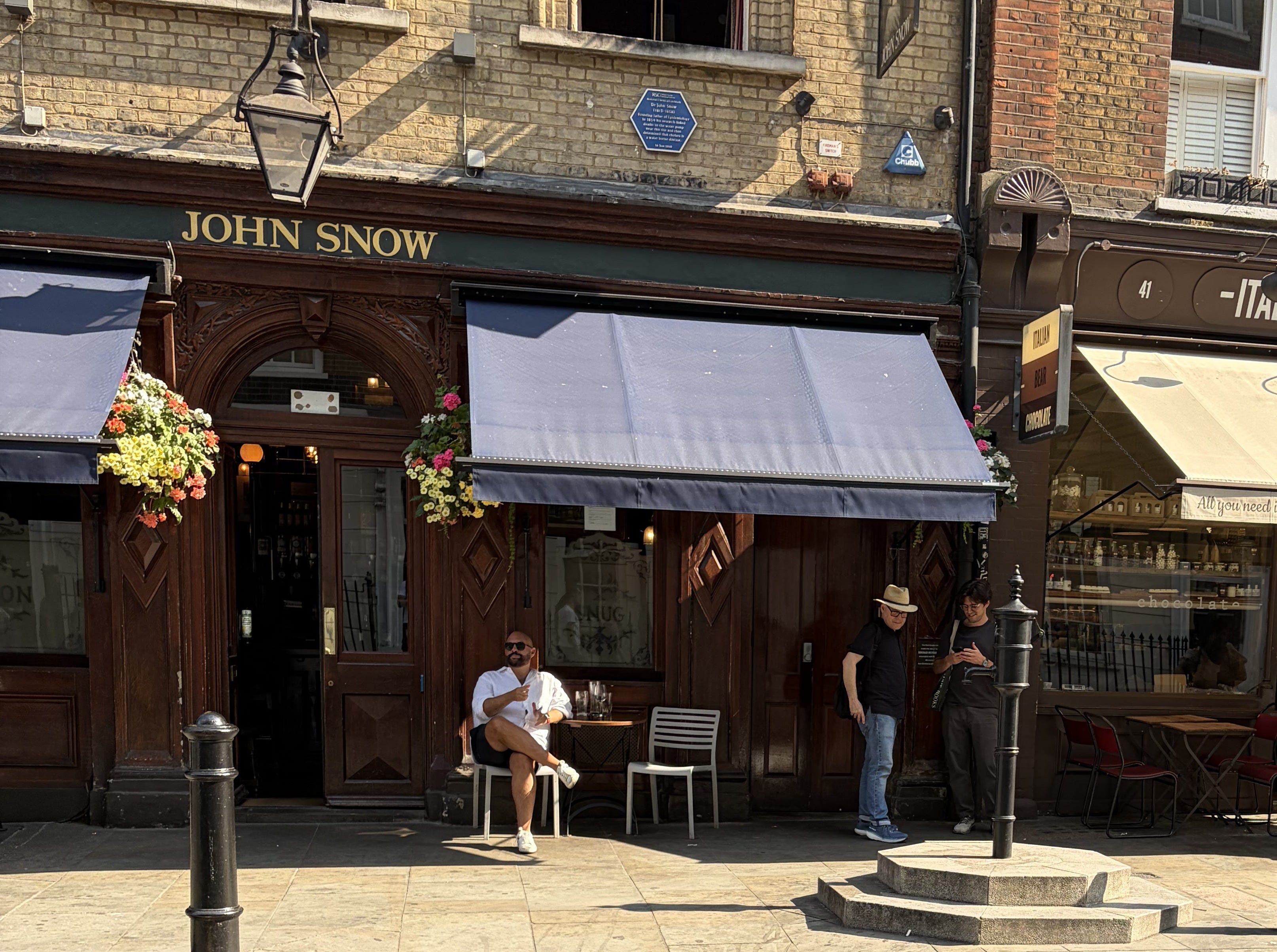
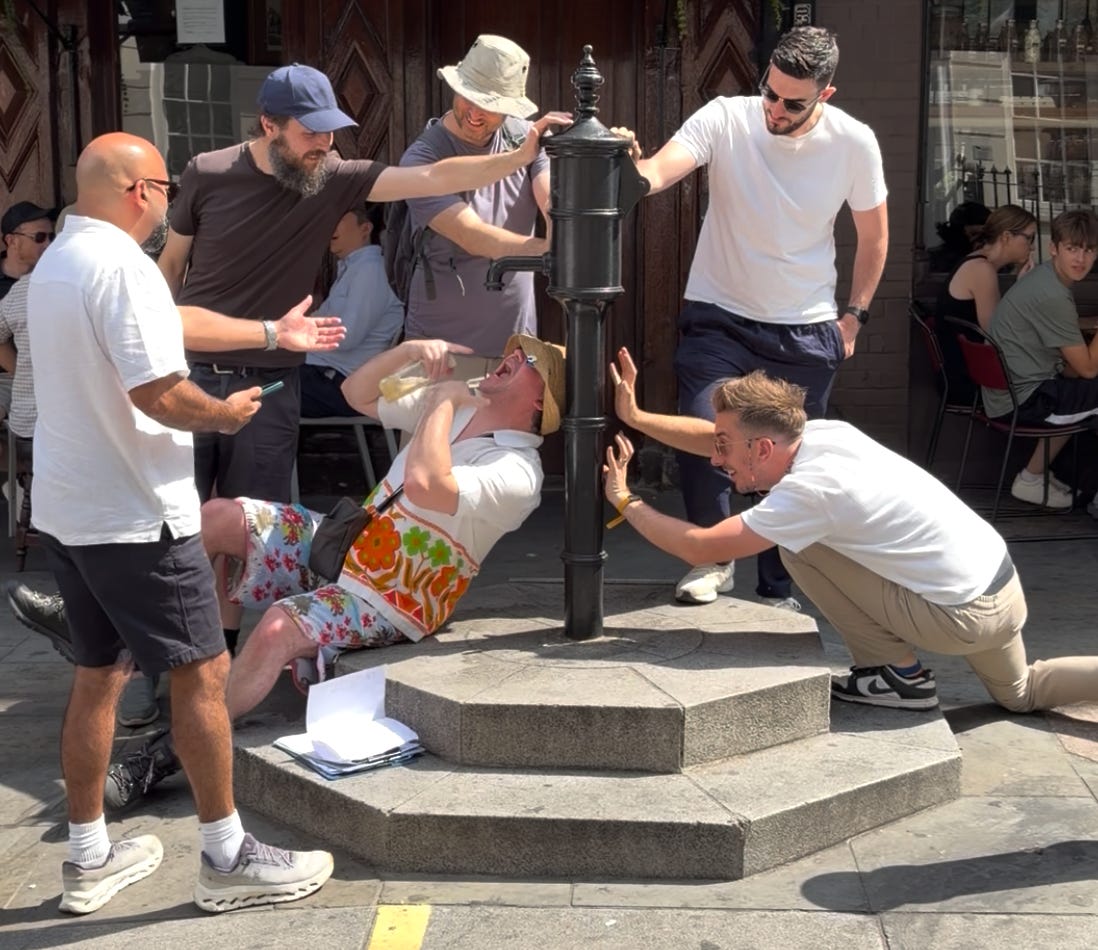
The John Snow Pub is located next to the handle-less commemorative pump standing in the spot of the original, where Snow correctly determined the Broad Street cholera outbreak began.
Excavations of the street after the outbreak was over determined that the Broad Street well was located three feet from a cesspit built to collect sewage and that the wall of the cesspit had deteriorated. A sick infant had lived across the street from the pump, and her fecal matter had leaked into the well. The infant died after five days. Her father got cholera the day the pump handle was removed, but with the handle removed his contaminated contributions to the cesspit until he died could not infect others.
Cholera today
The cholera epidemics of the 19th century are a reminder that even at a time when our world was bound together with trade using only small, slow sailing ships, the transmission of new disease from one part of the globe to another could and did lead to the death of millions. Today travel is fast and planes and ships are large. Truck drivers, business people, aid workers, and vacationers drive and fly easily from country to country, bringing with them Ebola, Covid, HIV, dengue, malaria, Zika, influenza, measles, and TB, among other diseases.
And cholera still travels, with the seventh and ongoing 1961 pandemic having spread across 45 countries, with many millions sick and hundreds of thousands dead. After its 2010 earthquake, our close neighbor Haiti had 665,000 cholera cases and over 8,000 deaths.
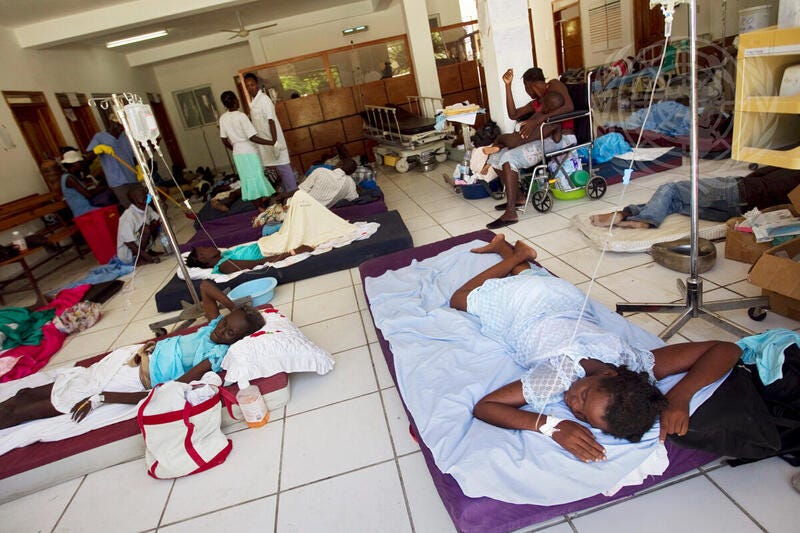
Fortunately, the CDC in combination with the World Health Organization, from which the U.S. withdrew this year, stepped in with a million doses of cholera vaccine and other prevention and treatment measures, saving thousands of lives.
Cholera in America
We haven’t had a major cholera outbreak in the United States since 1866. Our public water treatment and management systems have become robust and serve 87% of the population.
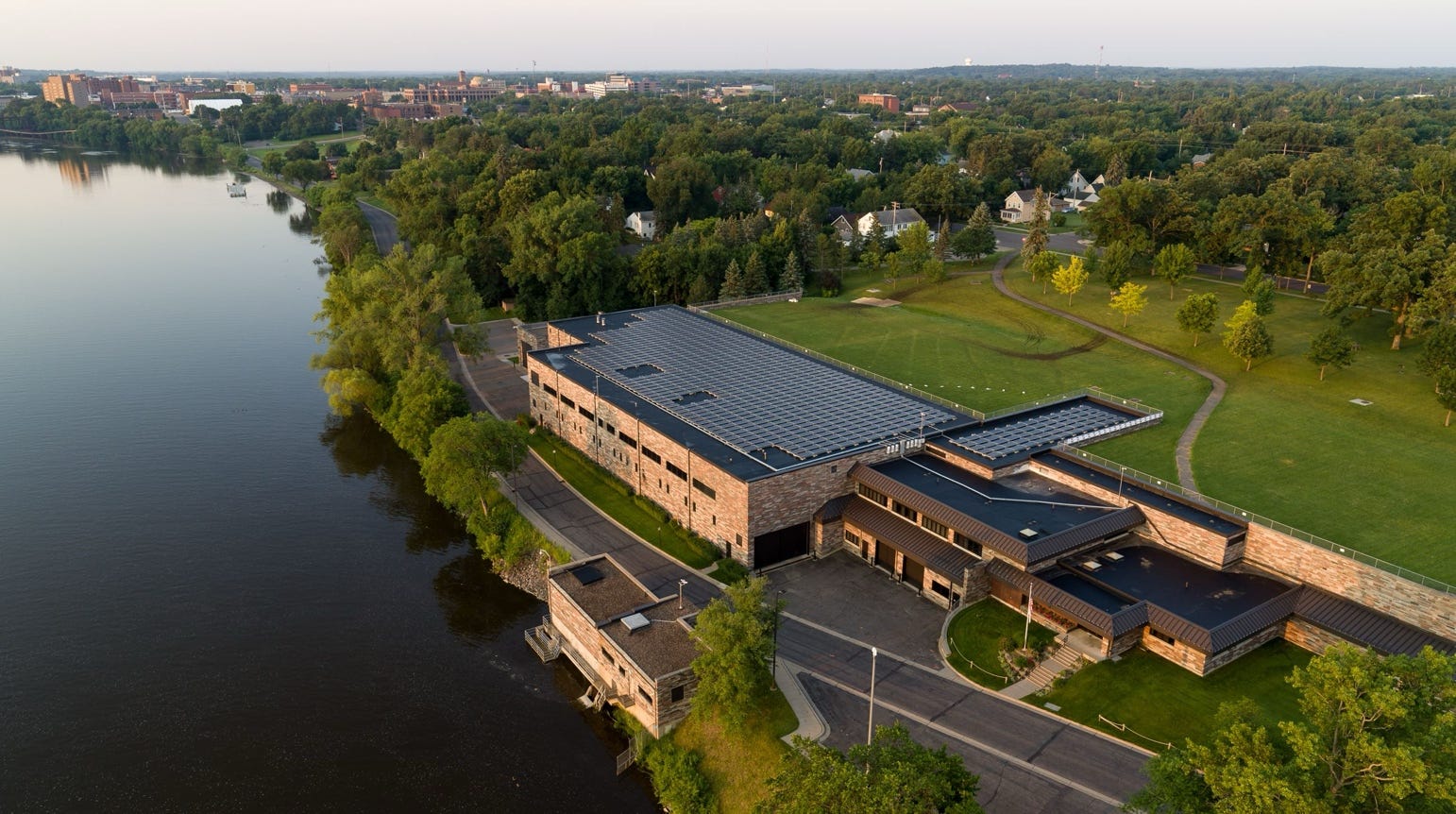
Eighty percent of the population are serviced by public sewer systems. The remaining primarily use septic tanks, which meet sanitation codes. It is presently unlikely that contamination of untreated water from wells and other sources could result in a cholera outbreak here, especially given the small number of cases coming from abroad. Most or all of the 12 cases recorded in the CDC’s “Cholera and Other Vibrio Illness Surveillance System,” COVIS, in the last year of reported data, 2024, occurred in travelers returning from countries where cholera is endemic.
Very rarely, cholera is contracted from consuming raw shellfish, particularly oysters, from the Gulf of Mexico. But cholera isn’t the only Vibrio species that can cause illness, even death. More commonly, a dozen or so other species of Vibrio bacteria cause vibriosis, which, when contracted from food or ingesting seawater, is a milder intestinal illness associated with diarrhea, vomiting, and fever. Vibrio bacteria can also get into open skin wounds of swimmers in salt or brackish water and cause infections, sometimes serious, with necrotizing of the flesh, or flesh-eating, as the media like to say. Infections from the bacteria species Vibrio vulnificus send people to the hospital and were fatal in one out of five cases reported to COVIS, although it’s likely that large numbers of less serious cases are usually not identified by state health departments and thus not reported to COVIS.

Vibriosis infections in 2024 were estimated by the CDC at 52,000 from food contamination, usually raw oysters, and 28,000 from, primarily, swimming. COVIS records all reported Vibrio infections, but the total of 80,000 estimated cases is 20 times the number of cases reported by state health departments to the CDC. Additionally, since last year, the Trump administration made reporting of Vibrio infections to the CDC’s FoodNet surveillance system optional for states.
Your risk of vibriosis from raw oysters? Very small, but ask your doctor, as the pharmaceutical ads say, if raw oysters are right for you – folks with certain medical vulnerabilities should be cautious.
To give you some numbers so that you can get a sense of your vibriosis risk if you like to eat raw oysters, it is popularly reported that two and one half billion oysters are consumed, cooked and raw, in the U.S. annually. There is some indication, but no hard data, that half or more of these 2.5 billion oysters may be consumed raw. That might total, very rough estimate mind you, 1-1/4 billion oysters and 52,000 cases of vibriosis. Perhaps not a high risk, statistically, but not nothing.
Here are a couple of fun facts: If the 2.5 billion number is correct, we are eating about a half-dozen oysters every year per American. However, in the late 1800s, before overfishing and pollution, wild oysters were so abundant and cheap, New Yorkers ate an average 660 oysters annually. Today, most people don’t know that 93% of oysters in the U.S. are farm-raised, about 1/3 from Louisiana and Texas, and the rest mainly from the East and West Coasts.
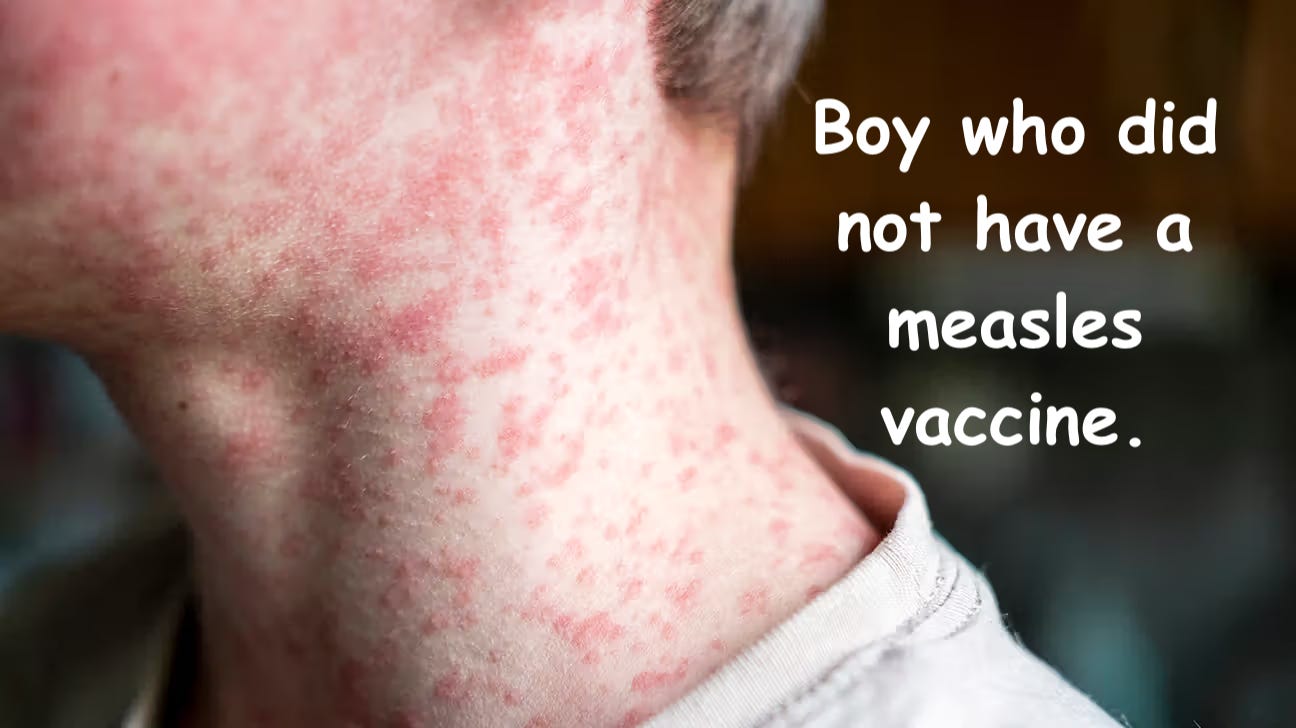
To review, vibriosis from raw shellfish or swimming in salt or brackish water is not common but a risk, the magnitude of which depends on an individual’s health status. Cholera in the U.S. is extremely rare, with just 12 cases in 2024, like measles in 2020, with just 13 cases. In fact, I have to note, in a triumph of public health, in the year 2000 measles was declared eliminated in the U.S., with the only cases being those brought into the country by travelers coming from abroad.
Unfortunately, MAHA politics, charlatan wellness influencers making money off their falsehoods, and anti-vaccine ideology have been prioritized over science. Witness the rise in measles cases from 13 in 2020 to 2,289 in 2025. As of July 24th, this year’s count is running double 2025’s, with 2,318 cases already reported. That this has been allowed to happen is tragic and alarming.
Under Trump, generally our public health protections have been corroded, eliminated, or deprioritized when in conflict with the wants of business interests. Relative to water-borne disease and nutrition, Trump is relaxing water quality and sewage fertilizer standards and has cut food inspections and disease surveillance funding here and abroad.
In a clear example of why Trump’s cavalier attitude toward public health is a danger, cyclospora infections in the current outbreak have hit an all-time high in America at 11,500 cases, with reports of new cases continuing to come in. Cyclosporiasis is spread primarily through irrigation water contaminated with human feces or fertilizer containing sewage. The administration’s fostering of the corrosion of trust in, and functionality of, the CDC and FDA has hampered the federal response to the cyclospora outbreak. Removal of obligatory reporting of cyclosporiasis from the CDC’s FoodNet surveillance system and the lack of stricter safety measures and accountability for cyclospora-vulnerable food producers is not a productive approach to reduce outbreaks. Vibrio infections, like cholera and Vibrio vulnificus, have also been removed from the FoodNet surveillance’s obligatory reporting, further blinding our government to a public health concern.
It requires money for food producers to take cyclospora containment measures. Taylor Farms, the producer of the lettuce involved in the current historically large outbreak, donated $1 million to Trump’s MAGA Inc. PAC after Trump took office last year

To return to the topic of large scale pandemics and our ability to cope with them, let’s not forget HIV and Covid, third and fifth on the all-time list of pandemics in terms of global deaths. Like the ongoing seventh cholera pandemic, which happens to be currently at the number seven spot as a killer on the list of pandemics, HIV continues to be a pandemic. Life without pandemics is not coming soon on this Earth.
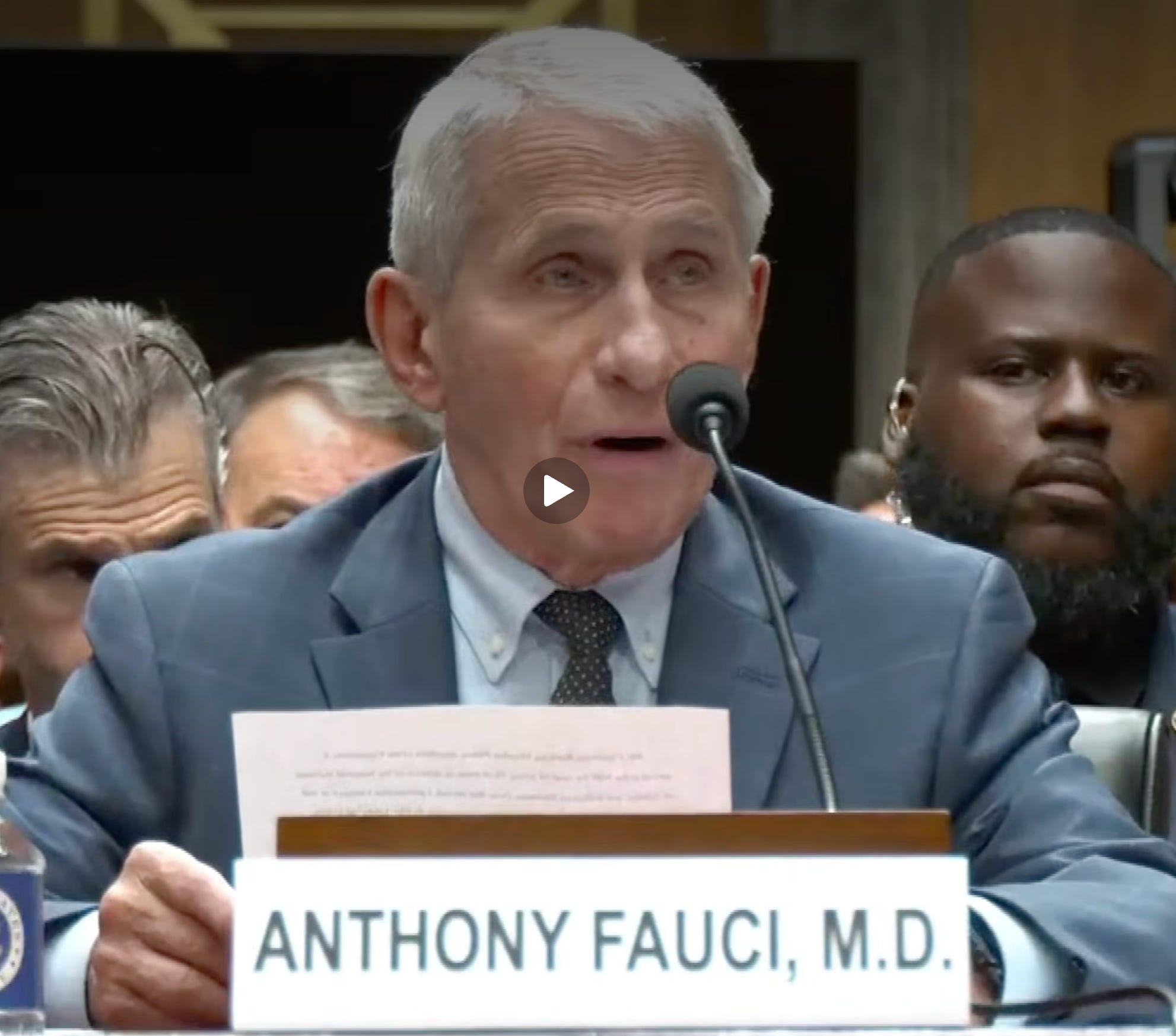
We can all remember the chaotic, stumbling response of our government, and the world as a whole, to Covid six years ago. Scientists like Anthony Fauci struggled to quickly understand the epidemiology of Covid in order to propose the most rationale responses. But we had a president, Donald Trump, who in the early weeks of the epidemic claimed Covid was no more severe than the flu and would disappear “like a miracle.” He later suggested in a press conference that injecting bleach or using ultraviolet light inside the body would kill the virus. He was adamant that the malaria drug hydroxychloroquine was a cure for Covid and wanted federal agencies to promote its use, although there was zero evidence that it could work. It was extremely bad leadership, harmful to our nation and likely expensive both in the loss of life and the wholeness of our social fabric. Trump should be testifying to Congress today, not Fauci, who has been sitting before Congress as I write.
We can speculate about why the English authorities of John Snow’s time balked at accepting the truth about cholera, that it was not from a mysterious miasma but from water contaminated by fecal matter. Perhaps they were afraid to acknowledge the government’s failure to protect public health. Maybe it was too embarrassing that the very foul, sewage-laden Thames was being used for drinking water. Perhaps regulating the private suppliers of water was politically difficult, or a government takeover of the responsibility for supplying clean water deemed too expensive. Or maybe, on some level, the leaders didn’t care that much because they were rich and could afford distilled water. Perhaps important scientists who had espoused the existence of a toxic miasma were unwilling to accept their error. For whatever reasons, solid science was ignored in favor of the false impressions of those in charge. Exactly like today in America.
Thank you for reading and for your support of Eating In America, especially by sharing posts or podcasts and your feelings and thoughts. Please subscribe or consider upgrading to support the research that goes into each post.
Stay hydrated and healthy!


