
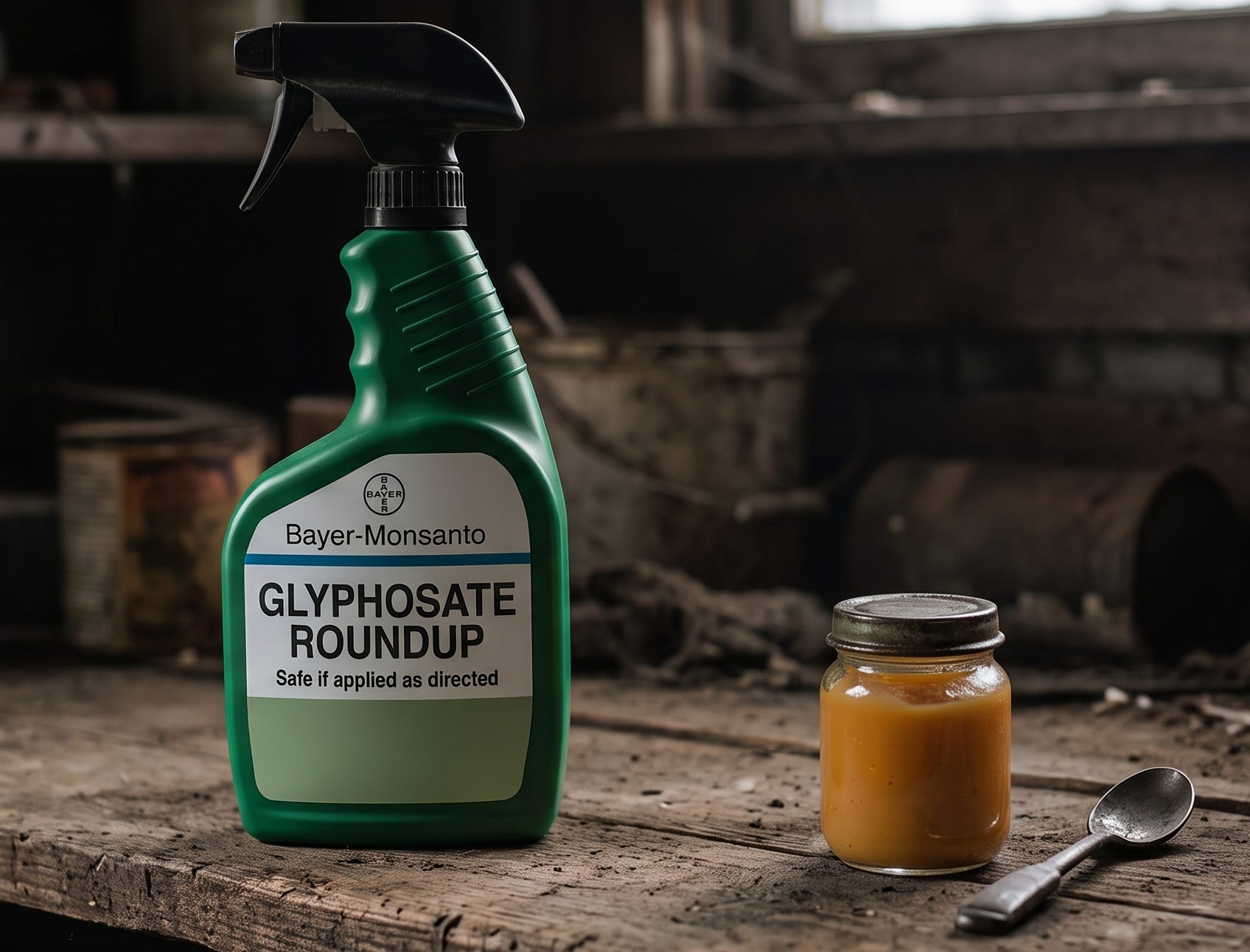
The Trump administration is supporting the financial interests of Big Agriculture and pesticide manufacturers like Bayer-Monsanto instead of the health concerns of its Make America Healthy Again constituency. MAHA is mad and sees it as a betrayal of their support for Trump. But all of America should be mad.
The big win for Roundup: Trump helps Bayer-Monsanto win at the Supreme Court
Trump fully backed Bayer-Monsanto at the Supreme Court, which ruled a few weeks ago that the Roundup manufacturer was immune from lawsuits from thousands of people claiming their cancer was caused by the glyphosate in Roundup. This ruling is expected to be extended to other pesticides that have been approved by the EPA and negates the ability of those claiming glyphosate harms to challenge the manufacturers for damages in state courts.
But what is the big picture with pesticides, which include herbicides like glyphosate, and health?
Glyphosate is by far the most widely used pesticide in America with 300 million pounds used annually in the United States on crops including corn, soybeans, wheat, oats, spinach, and almonds. In urine testing, the CDC found 81% of Americans had glyphosate in their system. According to the CDC, fruits, vegetables, and cereal grains are possible sources of glyphosate in people. Glyphosate has also been found in baby formula.
Glyphosate/Roundup health effects
So it’s in us every day. What about the health effects? The International Agency for Research on Cancer long ago declared glyphosate a probable carcinogen. But the EPA, relying heavily on a 2000 paper that reviewed the evidence, has said consistently that glyphosate is not a health risk.
However, according to the Washington Post, that very widely cited 2000 paper was withdrawn last year because authors on the paper may have been Monsanto employees, other authors may have been paid by Monsanto, and the studies cited in the review were unpublished and written by Monsanto. The credibility of the paper which was the basis of wide belief in the safety of glyphosate has crumbled, but still the EPA clings to its stance of glyphosate safety.
Cancers aside, research published in 2023 found when children were exposed to glyphosate there was the chance of an increased risk of liver disease, high blood pressure, prediabetes, obesity, and high cholesterol.
This research studied children in an agricultural area in California, with some in homes close to a lot of glyphosate spraying. Exposure levels for some of the children were higher than normally found just through eating contaminated food. This allowed differences in exposure levels to be used to evaluate differences in disease outcomes.
It is unclear to me how the exposures in that setting, the Salinas Valley in California, translate to the experience of the majority of children, who are exposed to glyphosate mainly from the food on their tables. Another unknown is how much exposure any kid is getting from the Roundup used widely for weed control on lawns and in parks.
We’ll get to this question of how much to worry and how to worry about pesticides in a moment.
Newly approved pesticides
If the backing of Bayer-Monsanto by Trump and the ensuing Supreme Court decision in favor of Roundup weren’t distressing enough, a few days later the EPA ignored substantial evidence of possible risks and approved a number of new pesticides including, based on suggestive evidence from animal studies, two that may have a risk of cancer and another that may have a risk of endocrine-disruption, that’s hormones for metabolism, reproduction, mood, and growth. One of the new EPA approved pesticides is a PFAS, a “forever chemical.” The health risks of PFAS chemicals are multiplied because they are designed to never breakdown and can stay in our bodies and environment, well, forever. This was the fifth PFAS pesticide approved by the Trump Administration. One previous PFAS approval was by Biden’s EPA.
PFAS “Forever chemicals,” now appearing in pesticides
In the midst of all this, the FDA rejected a petition to set thresholds for seafood and milk for two of the most common and dangerous of the 16,000 PFAS compounds, namely PFOA and PFOS. The FDA is ignoring evidence linking these “forever chemicals” to cancer, bad reproductive and child development outcomes, high cholesterol, liver disease, kidney disease, and decreased immunity.
And the EPA has found that most of the PFAS in our body comes from food, and the FDA has found that 60% of the seafood it sampled had PFAS. In limited testing, Consumer Reports found PFOS or PFOA in six out of 50 milk samples in 4 out of 5 milk brands, organic and not organic. There’s a good chance the milk you buy is occasionally positive for a PFAS. Blueberries, kale, and beer are among other foods that can contain PFAS. And, of course, PFAS can be found in nonstick cookware and other kitchen products.
With all these concessions from the EPA and FDA, the pesticide manufacturers must be very happy with the Trump administration.
Where does this leave us as consumers?
Even if we think eating organic makes sense in reducing our pesticide exposure, and I do, most of us cannot afford to eat all organic or are not willing to limit ourselves only to the foods we can find that are organic. Informed choices can be made!
The Dirty Dozen
The Environmental Working Group (EWG) publishes its famous Dirty Dozen list, created by analyzing USDA data. The Dirty Dozen is a great place to start. Here’s the 2026 list:
Spinach
Kale, collard and mustard greens
Strawberries
Grapes
Nectarines
Peaches
Cherries
Apples
Blackberries
Pears
Potatoes
Blueberries
I prioritize my organic dollars on those twelve.
The Clean Fifteen
EWG also provides a clean fifteen list, which is also very useful for picking produce likely to have the least toxic and lowest amounts of pesticides:
Pineapple
Sweet corn (fresh and frozen)
Avocados
Papaya
Onions
Sweet peas (frozen)
Asparagus
Cabbage
Cauliflower
Watermelon
Mangoes
Bananas
Carrots
Mushrooms
Kiwi
I buy non-organic produce freely from this list.
No matter where you live or the means you have to apply to healthy eating, my sense is that the health benefits of eating vegetables and fruit generally outweighs the risks linked to pesticides. But starting with the EWG tested rankings of the best and worst is a great way to have the vitamins, minerals, and fiber of produce while minimizing the bad stuff. Also, remember that frozen and canned vegetables and fruit can be just as nutritious as fresh, and frozen organic produce can be more affordable and sometimes more available than fresh.
As for meat, EWG points out that pesticides can accumulate in the fat of animals, making another area of the supermarket with choices to think about.
Finding the balance
With so many choices in what we eat and consume these days, for me reaching an informed balance is the goal. For example, what I spend on organic for berries, apples, and other items on the dirty dozen offsets what I save on non-organic items from the clean fifteen. And there are days when the local non-organic strawberries or peaches are just too beautiful and delicious, and they have to come home with me.
My approach suits me, and equally rationale approaches could be much stricter or much more relaxed. We are light years from having health data that can predict our individual health outcomes, and in any event what data we have has to be weighed against our individual circumstances. What we can say with some certainty is that if we greatly limit or eliminate the most toxic pesticides, we will have less pesticide-related disease in our children and the world.
I would love to hear in the comments about your choices and thoughts on the chemicals in our food.
Thank you for reading. Your support of Eating in America is important and appreciated. Likes, comments, and shares are great!


